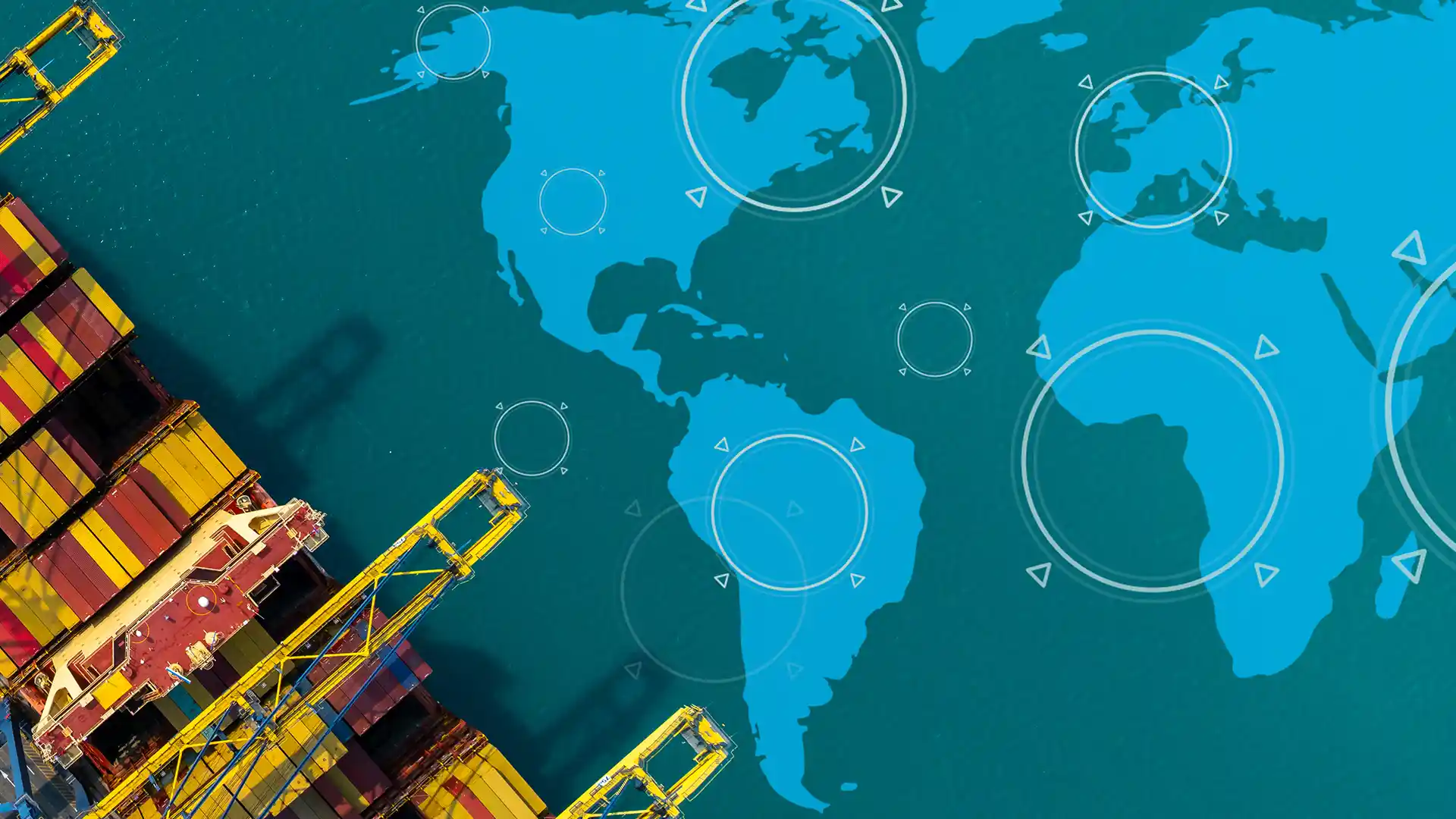
Global trade gives businesses access to new markets, suppliers, talent, and opportunities that can strengthen their competitive position.
A decade ago, global trade management was largely viewed as a back-office function. Something that needed to happen, certainly, but not something that gave a business a meaningful edge over its competitors. That perception has shifted considerably, and
Global trade management (GTM) is the end-to-end process of planning, executing, and monitoring cross-border trade, focusing on regulatory compliance, customs management, and supply chain visibility. In the current era, businesses that handle this entire management process well are turning it into an advantage. Here are five distinct reasons why.
Trade compliance errors are expensive. Incorrect tariff classifications, missed duty drawback opportunities, failure to apply preferential trade agreement rates, these mistakes add up quickly and compound across high shipment volumes. A business importing thousands of lines annually can overpay duties by significant amounts simply because the classification and valuation processes aren’t being managed with enough precision.
Effective global trade management builds the systems and expertise to catch these errors before they become costs. That might mean applying the correct rules of origin under a free trade agreement, or identifying where duty drawback applies to previously paid duties on re-exported goods. The savings are real and recurring, which means trade management pays for itself in ways that are measurable.

Delays at the border are a supply chain problem with a trade management solution. Shipments that arrive with complete, accurate documentation clear faster. Businesses with strong relationships with customs authorities and a track record of compliance face fewer examinations and holds. In some jurisdictions, trusted trader programs like Customs-Trade Partnership Against Terrorism in the United States or the Authorized Economic Operator program in the EU offer expedited clearance to businesses that meet specific compliance standards.
Getting into those programs requires exactly the kind of structured compliance that global trade management supports. Many businesses choose to work with specialists such as Livingston International, delegating the operational complexity of customs and compliance so their internal teams can stay focused on core business priorities. The result is a measurable reduction in border wait times that translates directly into supply chain speed and reliability.
Trade regulations are complicated, and they are getting more complicated. Tariff changes, export controls, sanctions updates, country of origin rules, restricted party screening requirements, keeping up with all of it requires dedicated expertise and systems. For many smaller or less sophisticated competitors, that complexity is genuinely limiting. They move slower, take more compliance risk, or simply avoid certain markets because the regulatory burden feels too high.
A business with mature global trade management capabilities can operate in markets and move at speeds that others cannot match. That is a competitive advantage that compounds over time as the regulatory environment continues to evolve, and it tends to widen the gap between companies that can scale internationally and those that struggle to grow beyond their home market.
One of the less obvious benefits of sophisticated trade management is the data it generates. When import and export processes are well-managed and documented, businesses gain visibility into where their goods are, what they’re costing at each stage of the supply chain, and where the delays and inefficiencies are occurring.
That visibility supports better sourcing decisions, more accurate landed cost calculations, and faster responses when disruptions occur. A business that knows in real time where a shipment is and what’s holding it up can make decisions that a business operating with partial information simply can’t. In practice, the companies that navigate supply chain disruptions most effectively tend to be the ones with the clearest picture of what’s happening across their trade operations.
The past several years have made it abundantly clear that trade routes and trade relationships are not stable indefinitely. Tariff disputes, sanctions, pandemic-related restrictions, and regional conflicts have all demonstrated that businesses relying on a single sourcing country or a single trade corridor are exposed in ways they may not have fully appreciated.
Global trade management supports the kind of supply chain diversification that reduces that exposure. Understanding where preferential duty rates apply, which alternative sourcing countries offer favorable trade agreement terms, and how quickly a business can pivot its import strategy when conditions change requires exactly the trade expertise that good management provides. Businesses that have built those capabilities aren’t just more resilient. They’re better positioned to act quickly when a disruption creates an opportunity that slower competitors can’t move on.
Global trade management has moved from an administrative function to a strategic capability, and the businesses treating it that way are seeing it in their results. The combination of cost reduction, speed, market access, decision-making quality, and resilience that strong trade management delivers is genuinely difficult to replicate through other means. As trade complexity continues to grow, the gap between businesses that manage it well and those that don’t will only widen.

Written by
Nonofo Joel, a Business Analyst at Brimco, has a passion for mineral economics and business innovation. He also serves on the Lehikeng Board as a champion of African human capital growth.
August 21, 2026
How to Migrate from Exchange to Office 365