Asian equity markets tumbled as hotter-than-expected US inflation data stoked aggressive Federal Reserve rate hike bets, with Seoul and Tokyo chipmakers bearing the heaviest losses.
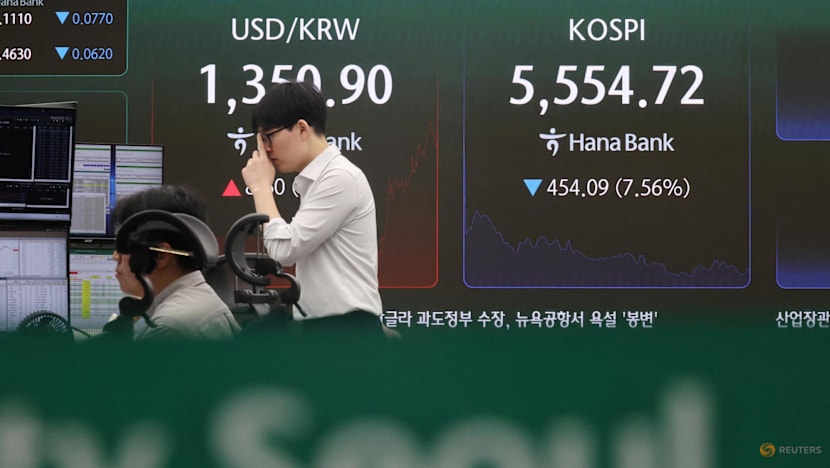
TOKYO, Japan – Asian equity markets experienced a broad-based sell-off as hotter-than-expected US inflation data forced investors to reprice the Federal Reserve interest rate trajectory, according to market data reported by Channel NewsAsia.
The negative catalyst rippled swiftly across the region, triggering aggressive profit-taking in high-flying technology names and weighing heavily on emerging market currencies against a resurgent US dollar.

MSCI’s broadest index of Asia-Pacific shares outside Japan fell 1.2%, reflecting severe risk aversion across major exchanges. The aggressive recalibration follows consecutive negative sessions on Wall Street, where tech-heavy indices retreated on mounting evidence of persistent domestic price pressures. Regional currency desks also felt the strain, as rising US Treasury yields pulled capital away from emerging market assets.
South Korea’s KOSPI index suffered steep downward revisions, driven heavily by retail and institutional investors bailing out of major semiconductor equities. Tokyo’s Nikkei 225 mirrored this trajectory, shedding early gains as local traders tracked the tech sector rout originating in the United States. Analysts note that valuations in regional tech hardware had reached demanding levels, leaving portfolios acutely vulnerable to macro-driven monetary shocks.
Foreign institutional investors accelerated capital outflows from regional order books. Market strategists point to the widening yield differential between US debt instruments and Asian sovereign bonds as a primary catalyst for currency depreciation across Southeast Asian jurisdictions.
For regional central banks, the resurgent US dollar and elevated Federal Reserve rate expectations complicate domestic monetary policy frameworks. Policymakers in Tokyo and Seoul face mounting pressure to defend local exchange rates against imported inflation, even as domestic growth indicators remain fragile. Importers across the region must contend with higher dollar-denominated commodity costs, which threaten corporate operating margins across manufacturing and energy sectors.
Debt servicing costs for regional corporations holding dollar-denominated liabilities are projected to rise significantly in the near term. Fixed-income strategists suggest that until US inflation prints consistently align with central bank targets, capital flows into Asian emerging markets will remain subdued, keeping equity valuations under sustained pressure.

Written by
Tumisang Bogwasi, Founder & CEO of Brimco. 2X Award-Winning Entrepreneur. It all started with a popsicle stand.