Family Offices Propel Investment Beyond SpaceX into Emerging Space Economy Sectors
High-net-worth family offices are increasingly diversifying their investments in the space economy, moving beyond established launch providers like SpaceX to target nascent sectors such as in-orbit servicing, advanced satellite applications, and lunar infrastructure development. This strategic shift aims to capitalize on long-term growth opportunities and a maturing commercial space market.
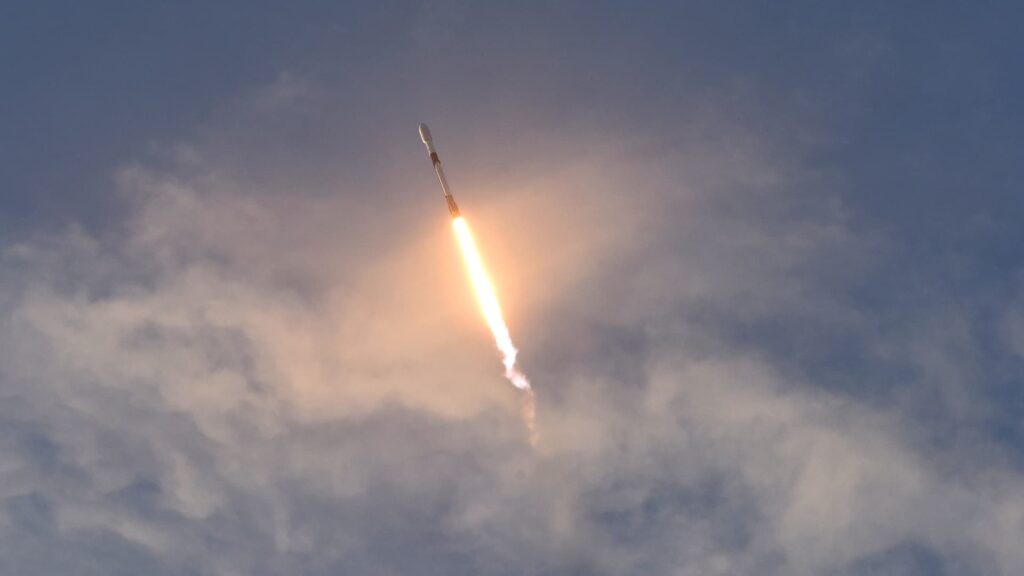
NEW YORK, United States – Family offices are significantly broadening their investment horizons within the space economy, directing capital towards burgeoning segments beyond established launch companies such as SpaceX. This strategic pivot reflects a maturing market where sophisticated investors are seeking value in upstream and downstream applications, according to recent analysis from financial industry observers, including a CNBC report on billionaire investing trends. These private wealth managers are identifying growth opportunities in areas like in-orbit manufacturing, satellite data analytics, and the foundational infrastructure for future lunar operations. The shift signifies a diversification away from the capital-intensive launch sector into areas with potentially higher, long-term returns and disruptive technological advancements. ## Highlights
- Family offices pivot investments to diverse space economy segments beyond launch.
- Capital targets in-orbit servicing, advanced satellite applications, and lunar infrastructure.
- Shift indicates maturation of private investment in commercial space ventures.
- Investors seek value in data analytics, space manufacturing, and Earth observation.
- Diversification aims for sustainable long-term returns in the aerospace sector. Family offices, known for their patient capital and long-term investment horizons, are increasingly attracted to the expansive potential of the space economy. This market, which reached a record $546 billion in 2023, continues to grow, driven by both commercial innovation and government initiatives, as detailed in the Space Foundation’s ‘The Space Report’. Their current investment thesis extends beyond the initial wave of enthusiasm for rocket companies, focusing instead on the enabling technologies and services that will underpin future space endeavors. Key areas of interest include companies developing in-orbit servicing and manufacturing capabilities. These ventures aim to prolong satellite lifespans, refuel spacecraft, and create new materials or products in microgravity environments. Such technologies promise to reduce operational costs and enhance the utility of space assets, creating significant economic value. Another significant focus is on advanced satellite applications. This encompasses high-resolution Earth observation, sophisticated telecommunications networks, and the processing of vast amounts of space-derived data. Investments are flowing into firms that can translate raw satellite data into actionable intelligence for industries ranging from agriculture and climate monitoring to defense and urban planning. ### Lunar Economy and Infrastructure The burgeoning lunar economy represents a frontier for family office investment. As governmental agencies like NASA, through its Artemis program, and private entities plan more frequent missions to the Moon, the demand for lunar logistics, power generation, resource extraction, and habitation infrastructure is escalating. Investors are exploring opportunities in companies developing everything from lunar landers and rovers to communication relays and construction technologies tailored for the extraterrestrial environment. These investments are often characterized by their higher-risk, higher-reward profiles, aligning with family offices’ typical appetite for early-stage and growth-stage companies with disruptive potential. The long development cycles and substantial capital requirements inherent in space ventures are often more palatable to family offices compared to traditional venture capital funds with shorter exit timelines. ### Global Capital Implications The diversification of family office capital into niche space sectors holds significant implications for global aerospace markets, particularly in North America and Europe. This influx of private funding complements government spending and traditional venture capital, fostering a more robust and resilient ecosystem for innovation. It enables smaller, specialized companies to secure funding for critical research and development, accelerating the commercialization of advanced space technologies. For regions with strong aerospace industrial bases, such as the United States and parts of the European Union, this trend reinforces their leadership in space technology and services. The strategic investments help solidify supply chains, attract specialized talent, and create new economic opportunities, further integrating space into the broader global economy. The continued expansion of the space sector is projected to reach over $1 trillion by 2040, driven by these diverse applications and investment strategies, according to Morgan Stanley Research.