Hong Kong parking violations generated at least HK$70 million annually across more than 220,000 citations per year, prompting lawmakers to demand stricter enforcement and tech-enabled monitoring to relieve urban logistics bottlenecks.
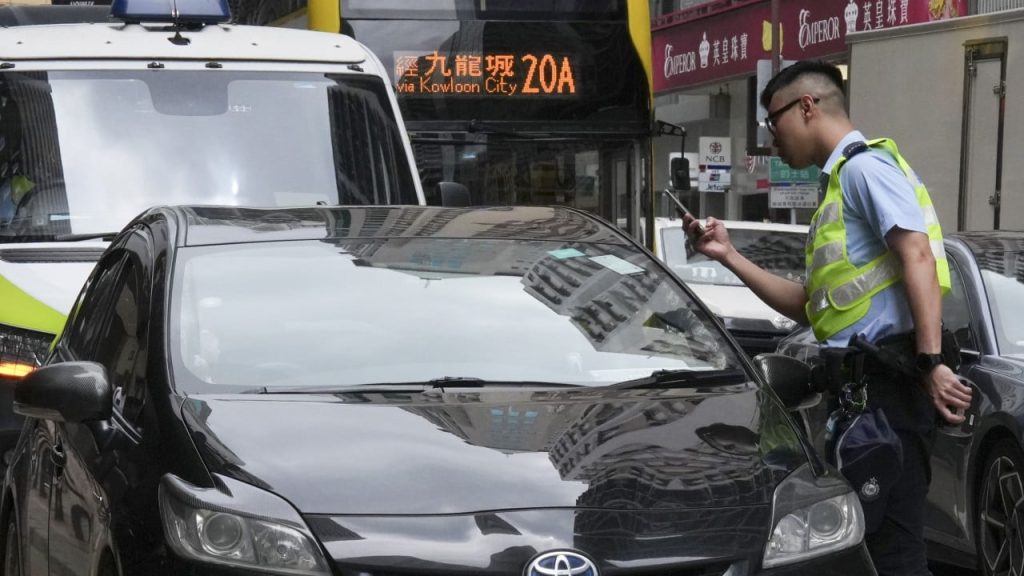
HONG KONG, China: Traffic enforcement agencies issued over 220,000 parking penalty tickets in each of the past three years, generating at least HK$70 million ($8.92 million) annually in municipal transport disclosures. The steady revenue stream reflects persistent curb space deficits that continue to increase operating costs for urban logistics providers.

Despite predictable receipts from metered violations, lawmakers are escalating pressure on the government to penalize chronic offenders who obstruct arterial roadways. Municipal authorities face persistent friction between maintaining retail accessibility and preventing supply chain delays in dense business districts.
Secretary for Transport and Logistics Mable Chan reported that officers issued 259,589 penalty tickets in 2023 and 242,550 in 2024. Enforcement actions subsequently logged 225,489 tickets in 2025 across high-density commercial districts. The infractions centered on metered parking violations and unauthorized occupation of municipal bays.
Standardized penalties provide predictable non-tax fiscal receipts for the territory’s balance sheet. However, commercial transport operators face mounting delivery expenses and administrative friction as street-level ticketing intensifies across core business districts. Rising overhead risks eroding margins for local fleet management firms.
The enforcement push reflects broader urban infrastructure challenges across Asian financial centers. Efficient curb space allocation directly influences commercial delivery timetables, retail turnover, and fleet productivity in congested central districts. Regional peers managing dense logistics hubs face similar trade-offs between penalty revenue and commercial transport velocity.
Legislator Mark Chong Ho-fung requested that the Transport Department escalate spot checks against chronic offenders. He also urged direct intervention against commercial vendors using external objects to block public spaces. These systemic obstructions exacerbate delivery bottlenecks and reduce turnover for neighboring storefronts.
Transport officials launched a pilot program in July deploying advanced parking sensors across targeted corridors, including Kut Shing Street and Cheung Ning Street. The automated hardware aims to deter unlawful parking and streamline municipal enforcement workflows. Successful trials could accelerate infrastructure automation across other dense Asian trade nodes.

Written by
Tumisang Bogwasi, Founder & CEO of Brimco. 2X Award-Winning Entrepreneur. It all started with a popsicle stand.