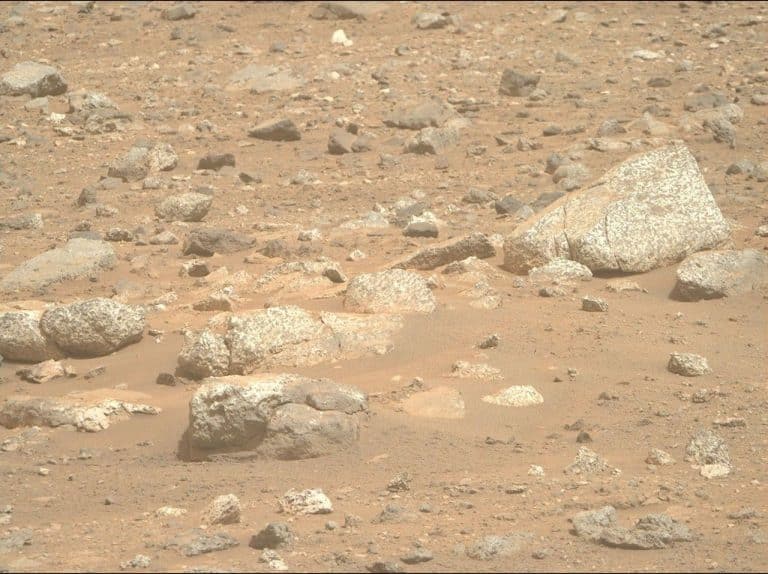
NASA Langley Research Center's foundational work in aerodynamics and spacecraft technology has been instrumental in achieving milestones in Mars exploration, including the Perseverance rover's landing and ongoing research into Martian conditions.

HAMPTON, VA – NASA’s Langley Research Center, a cornerstone of American aerospace innovation for over a century, has played a critical, though often behind-the-scenes, role in the agency’s ambitious Mars exploration efforts.
The center’s early and ongoing contributions to aerodynamics, materials science, and spacecraft design have provided the fundamental knowledge and technologies that enabled missions like the Mars 2020 Perseverance rover to successfully land on the Red Planet. Langley’s research has been pivotal in understanding atmospheric entry, descent, and landing (EDL) – the most challenging phase of any Mars mission.
From the earliest concepts of supersonic flight to the complex challenges of interplanetary travel, Langley’s scientists and engineers have continuously pushed the boundaries of what is possible in spaceflight. Their work on thermal protection systems, guidance, navigation, and control, and the effects of Martian dust on equipment are essential for current and future robotic and human missions to Mars.

Langley’s historical legacy includes groundbreaking research that paved the way for the Apollo program and subsequent space shuttle missions. This deep well of expertise is now being applied to the challenges of returning humans to the Moon through the Artemis program and eventually sending astronauts to Mars. The center’s focus on advanced materials and robust systems is crucial for ensuring the safety and success of these long-duration space voyages.
Ongoing research at Langley also addresses critical questions for future Mars explorers, such as establishing safe exposure limits for Martian dust. This work is vital for protecting astronaut health and ensuring the longevity of surface operations. The insights gained from robotic missions, such as the data collected by the Perseverance rover regarding ancient Martian impacts, further inform NASA’s strategic planning for human expeditions.
NASA’s commitment to exploring Mars is a multi-faceted endeavor, with centers like Langley providing the foundational research and technological development necessary to achieve these complex scientific and engineering feats. The journey from Hampton, Virginia, to the surface of Mars represents a testament to sustained innovation and a deep understanding of the principles of flight and space exploration.

Written by
Tumisang Bogwasi, Founder & CEO of Brimco. 2X Award-Winning Entrepreneur. It all started with a popsicle stand.