NASA researchers are leveraging airborne and satellite technologies to study the critical changes in Arctic sea ice, aiming to enhance climate models and understand the region's impact on global weather patterns.
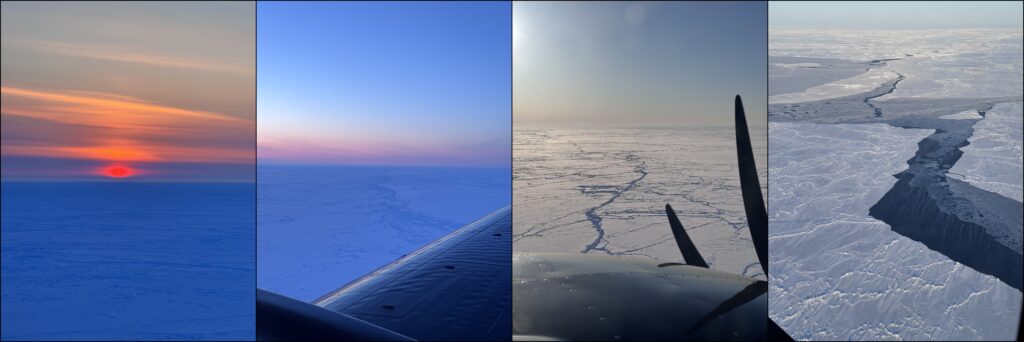
WASHINGTON, D.C. – NASA scientists are undertaking a dual-pronged approach, utilizing both aircraft and spacecraft, to meticulously study the rapidly changing Arctic sea ice. This initiative aims to deepen the understanding of the region’s crucial role in Earth’s climate system and its broader implications for global weather and sea levels.
The research employs advanced remote sensing technologies and in-situ measurements to capture detailed data on sea ice extent, thickness, and condition. The Arctic is experiencing warming at a rate significantly faster than the global average, making it a focal point for climate change research. Understanding these shifts is vital for predicting future climate scenarios and informing mitigation strategies.
NASA’s Airborne Science program is deploying specialized aircraft equipped with sophisticated instruments to fly directly over Arctic ice formations. These missions provide high-resolution data that complements observations from satellites orbiting Earth. The combination of aerial and orbital perspectives allows for a comprehensive view of the sea ice cover, its dynamics, and the environmental factors influencing its decline.

These efforts are part of NASA’s broader Earth science portfolio, which uses the unique vantage point of space to study our home planet. The data collected from these investigations will be assimilated into climate models, improving their accuracy in forecasting sea-level rise, weather patterns, and the impact of climate change on vulnerable ecosystems.
The Arctic region acts as a critical component of the Earth’s climate regulation system, influencing ocean currents and atmospheric circulation worldwide. Changes in sea ice cover have cascading effects, impacting everything from polar wildlife habitats to global shipping routes and weather systems in temperate zones. NASA’s continued investment in Arctic research underscores the agency’s commitment to monitoring and understanding Earth’s changing climate from multiple perspectives.
This study highlights the synergy between different NASA mission areas, including Earth science, aeronautics, and space exploration. The data gathered will contribute to a growing body of knowledge essential for addressing one of the most pressing environmental challenges of our time.

Written by
Tumisang Bogwasi, Founder & CEO of Brimco. 2X Award-Winning Entrepreneur. It all started with a popsicle stand.