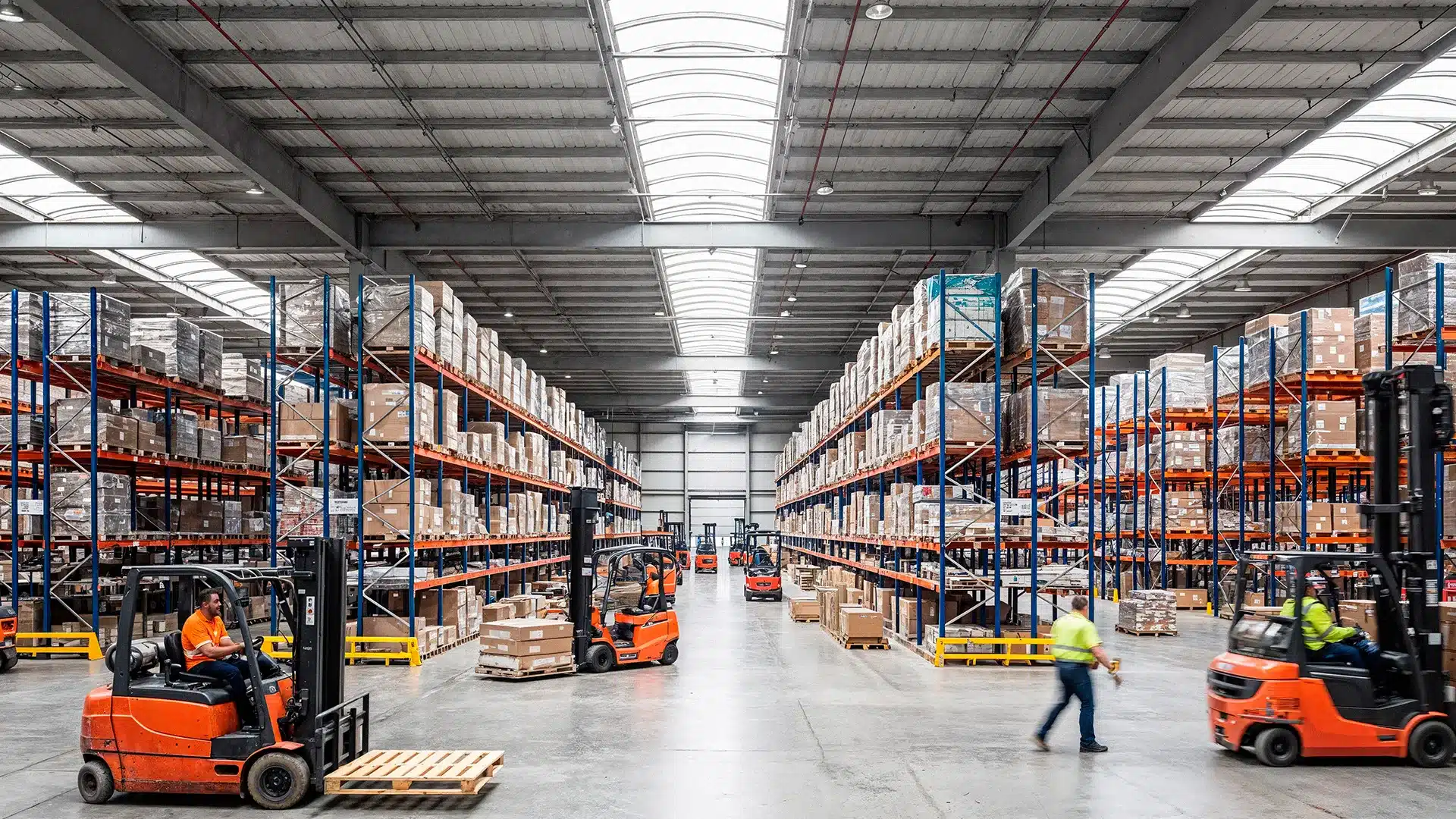
Have you ever wondered why your warehouse feels busy all the time but still not as efficient as it should be? At first glance, everything may seem under control orders are being packed, shipments are moving out, and
Individually, these issues may seem minor, but over time they start to affect overall performance. This is where businesses begin to realize the need for more structured, system-driven operations. Solutions like a warehouse management system help bring clarity, accuracy, and consistency turning everyday inefficiencies into streamlined processes.
Let’s break down the most common warehouse challenges and how the right system solves them.
One of the most frustrating challenges in any warehouse is not knowing exactly what is in stock—or where it is located. You may assume inventory is available, only to later discover that items are misplaced, miscounted, or not updated in the system.

This lack of visibility creates a ripple effect across operations. Orders get delayed, customers experience frustration, and teams spend valuable time reconciling discrepancies instead of focusing on execution.
This is where a warehouse management system (WMS) becomes essential. Instead of relying on manual tracking or fragmented records, businesses can use real-time data to monitor inventory movement, location, and availability.
Solutions such as Deposco demonstrate how real-time visibility and connected warehouse systems help businesses track inventory more accurately and reduce costly errors across operations.
With the right system in place, organizations can achieve:
When inventory is visible and reliable, warehouse operations become significantly more controlled and efficient.
As order volumes grow, many warehouses struggle to maintain efficiency. Processes that once worked smoothly at lower demand start to break down under increased pressure. Teams may spend more time walking between locations, searching for items, or managing orders when a workflow is not clearly defined.
Over time, these inefficiencies slow down fulfillment and increase operational costs.
A Warehouse Management System helps address this by optimizing workflows and improving task execution across the warehouse. It organizes picking routes, prioritizes orders, and reduces unnecessary movement within operations.
With a structured system in place, businesses can achieve:
By streamlining these activities, warehouses move from reactive handling to a more structured and predictable fulfillment process.
Many businesses assume they need more warehouse space when operations feel crowded. However, in most cases, the real issue is not space—it is how effectively that space is being used.
Without a structured system, inventory placement often becomes inconsistent. Frequently used items may be stored in hard-to-reach locations, while valuable storage areas remain underutilized. Over time, this leads to inefficiencies in movement, storage, and retrieval.
A warehouse management system helps address this by organizing inventory more strategically. It ensures products are stored based on demand patterns, size, and movement frequency, improving overall layout efficiency.
With better space utilization, businesses can:
By optimizing the use of space, organizations can significantly improve operational efficiency without investing in additional infrastructure. In many cases, a better organization delivers more value than expansion.
Growth is a positive signal for any business but it also introduces new operational challenges. Processes that work efficiently at a smaller scale often begin to break down as order volumes and inventory complexity increase.
Without the right systems in place, scaling can lead to:
A WMS provides the structure needed to scale effectively. It enables organizations to manage higher volumes without sacrificing accuracy, speed, or control.
With a scalable system in place, businesses can:
Modern WMS platforms are designed to support business growth by improving productivity, reducing operational friction, and strengthening coordination across warehouse activities.
Instead of questioning whether operations can keep up with growth, organizations gain the confidence to scale in a controlled and predictable way.
Warehouse challenges rarely appear overnight they build gradually as businesses scale. What begins as small inefficiencies can quickly evolve into significant operational roadblocks if not addressed early.
A warehouse management system is more than just a tool it is a structured solution to the most common challenges businesses face, from inventory inaccuracy to scaling limitations. When these issues are resolved, the warehouse becomes more than an operational necessity; it becomes a reliable driver of business growth.
Ultimately, the goal is not just to manage warehouse operations, but to transform them into systems that are smarter, faster, and more efficient as the business evolves.

Written by
Nonofo Joel, a Business Analyst at Brimco, has a passion for mineral economics and business innovation. He also serves on the Lehikeng Board as a champion of African human capital growth.