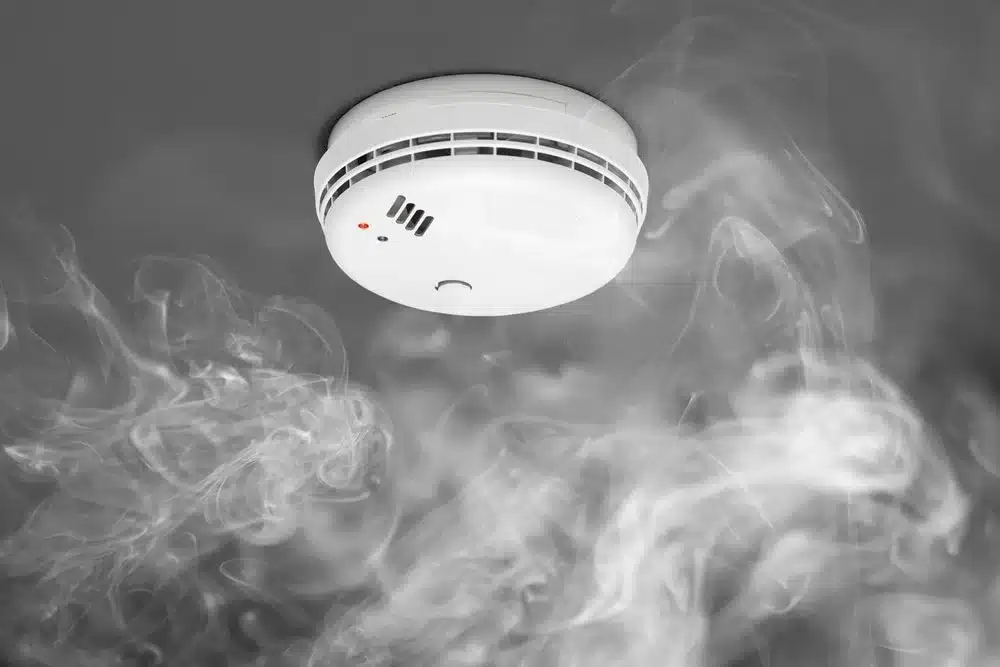
In 2023, the National Fire Protection Association reported that nearly 40% of home fire deaths occurred in residences without functioning smoke alarms, underscoring the critical importance of effective smoke detection for saving lives (source: nfpa.org). As a homeowner,
Ionization smoke detectors operate by using a small amount of radioactive material, typically Americium-241, placed between two electrically charged plates. This setup ionizes the air in the sensing chamber, creating a steady electrical current. When smoke enters the chamber, it disrupts this current by attaching to ions, triggering the alarm. This technology excels at detecting fast-burning fires that produce small, invisible combustion particles, such as those from ignited paper or flammable liquids.
For example, in kitchen fires involving quick flames, ionization detectors often provide the earliest alert. However, they are more prone to false alarms triggered by cooking aerosols or steam, which can be a consideration in placement and maintenance.
Photoelectric smoke detectors use a light source and a light sensor positioned at an angle inside a sensing chamber.

Under normal conditions, the light beam does not hit the sensor directly. When smoke enters the chamber, it scatters the light beam, allowing some light to reach the sensor and activate the alarm.
This technology is particularly sensitive to larger smoke particles produced by smoldering fires, such as those from a cigarette burning in upholstery or electrical wiring overheating.
Photoelectric alarms tend to generate fewer false alarms from common household activities, making them well-suited for areas near kitchens and bathrooms. Their early detection capability for slow, oxygen-starved fires can be crucial in preventing fire deaths that happen due to toxic smoke inhalation before flames erupt.
Neither ionization nor photoelectric detectors alone can reliably detect all fire situations. Ionization alarms are quick for flaming fires but less effective for smoldering fires, while photoelectric detectors excel at sensing smoldering fires but respond slower to fast flames. This gap creates potential blind spots if only one technology is used.
The National Fire Protection Association (NFPA) and fire safety experts recommend integrating both technologies either through multiple alarms or dual sensor detectors that combine ionization and photoelectric chambers in one unit.
This approach offers comprehensive protection by maximizing early warning across various types of fires, ultimately saving lives and reducing property damage.
To fully leverage these technologies, proper installation and upkeep are essential. The NFPA advises placing smoke detectors on every level of your home, inside bedrooms, and outside each separate sleeping area. Because smoke rises, installing alarms high on walls or ceilings optimizes detection.
Regular maintenance includes testing alarms monthly, replacing batteries twice a year, and cleaning units to prevent dust buildup that can impair sensors. Notably, 26% of smoke alarm failures between 2014 and 2018 were due to dead batteries, highlighting the importance of upkeep.
If your budget allows, consider upgrading to hardwired smoke alarms or dual sensor detectors for enhanced reliability and comprehensive coverage.
The market is increasingly favoring photoelectric and dual sensor alarms due to their broader detection capabilities and reduced nuisance alarms.
Smart smoke detectors are also gaining traction, offering remote monitoring, automatic alerts, and integration with home security systems.
These innovations align with broader trends in security system technology, providing both convenience and improved safety.
Your understanding of what are the two types of smoke detection technologies empowers you to make informed decisions about fire safety. By combining ionization and photoelectric smoke detectors, you ensure comprehensive protection tailored to different fire scenarios.
Proper installation, regular maintenance, and consideration of advanced technologies like dual sensor and smart alarms can significantly reduce fire deaths and enhance occupant safety.
Ionization detectors use radioactive material to detect small smoke particles from fast-burning fires, while photoelectric detectors use a light beam to sense larger smoke particles from smoldering fires. Each technology responds differently depending on the fire type.
Yes. Using both types or a dual sensor detector provides the best protection by covering the full spectrum of fire situations, offering early warning for both flaming and smoldering fires.
You should test your smoke alarms monthly, replace batteries at least twice a year, and clean the units regularly to ensure reliable operation. Proper maintenance is crucial since many alarm failures are due to dead batteries or dust.
Dual sensor smoke detectors combine ionization and photoelectric technologies into one device, providing comprehensive detection of various fire types without needing multiple separate alarms.
Yes. Smart smoke detectors offer remote alerts, integration with security systems, and proactive maintenance notifications, which can enhance overall fire safety and convenience.

Written by
Nonofo Joel, a Business Analyst at Brimco, has a passion for mineral economics and business innovation. He also serves on the Lehikeng Board as a champion of African human capital growth.