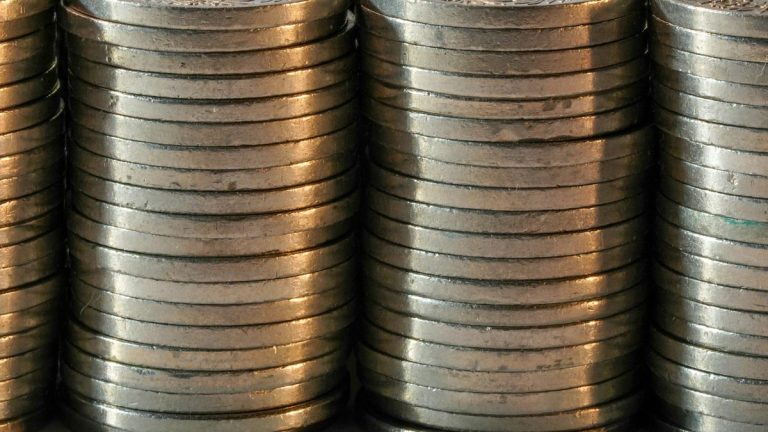
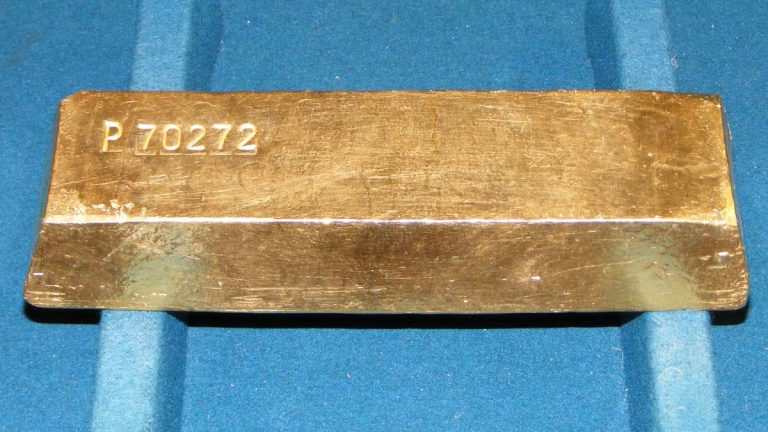
Photo: Vitaly Gariev/Unsplash
By the Brimco Editorial Team. Last updated October 28, 2026.
Disclosure: Brimco may earn a commission if you buy through links on this page, at no extra cost to you.
Not financial advice: This guide is general education, not tax, legal or investment advice. A rollover mistake can create taxable income, so confirm details with your plan administrator and a qualified tax professional.

Yes. A 401(k) to gold IRA rollover (often searched as a “401k to gold IRA rollover”) moves money from an employer retirement plan into a self directed IRA that can hold physical gold and other IRS approved precious metals. Done as a direct rollover, it is not a taxable event. The catch: most plans only allow a rollover after you leave the employer, reach age 59½, or meet another plan-specific trigger, and you must follow IRS rules on eligible metals and storage.
This guide is for US 401(k) holders. Readers in Canada and India cannot roll local pension plans into a US gold IRA; see the note near the end.
Most 401(k) plans offer only paper assets such as stock market funds, bond funds and target date funds, so your 401(k) cannot usually hold physical gold. The money has to move into a new gold IRA account. A gold IRA is a traditional IRA or Roth account held by a self directed IRA custodian that allows physical metals. The account structure is the same as any tax advantaged retirement account; only the assets differ. The process involves four parties:
New to gold IRAs? Read our pillar guide, Gold IRA: What It Is, IRS Rules, Fees and Risks.
| Direct rollover | Indirect rollover | |
|---|---|---|
| How money moves | Plan pays the new IRA custodian directly | Plan pays you; you redeposit |
| Tax withholding | None | 20% mandatory federal withholding on eligible rollover distributions from a 401(k) |
| Deadline | No personal deadline | 60 days to deposit the full amount |
| Risk | Low | Missed deadline means taxable distribution, plus 10% additional tax if under 59½ |
With an indirect rollover, if your plan withholds 20%, you must make up that 20% from other funds within 60 days to roll over the full amount. Otherwise the withheld part counts as taxable income. You get the withholding back as a tax credit only when you file. For almost everyone, a direct rollover or trustee-to-trustee direct transfer is the safer route.
Note: the IRS one-rollover-per-12-months limit applies to IRA-to-IRA indirect rollovers. It does not apply to rollovers from a 401(k) or to direct trustee-to-trustee transfers.
Ask the plan whether you can take a rollover distribution from your retirement plan. Former employer plans are usually eligible. If you still work there, check whether the plan allows in-service distributions, often at age 59½.
Compare dealers on published fees, minimums, storage and buyback terms. Ask who the custodian is and get the custodian’s fee schedule. Our best gold IRA companies comparison lists published minimums from $5,000 to $50,000.
Complete the custodian’s application. Choose a traditional gold IRA for pre-tax 401(k) money, or a Roth IRA for designated Roth 401(k) money. Rolling pre-tax money into a Roth account is a conversion, which means income taxes on the converted amount, so understand the tax implications first.
Ask your 401(k) plan to send the money straight to the new gold IRA custodian. The check or wire should be payable to the custodian “for the benefit of” you, not to you personally.
When the funds arrive, select IRS approved metals and lock in pricing with the dealer. Ask for the price per ounce, the markup over spot and the buyback policy in writing before you approve the trade.
The dealer ships the metal to the depository. Confirm it is listed on your custodian statement. Keep Form 1099-R from your plan; a direct rollover is reported but should not be taxable.
Get Noble Gold’s free Wealth Protection Kit
Internal Revenue Code section 408(m) bars collectibles in IRAs but allows certain coins and bullion:
Numismatic coins and most collectible coins do not qualify.
IRA metal must be held by your custodian at an approved depository, not in personal possession. The US Tax Court’s 2021 McNulty decision found that keeping IRA-purchased coins at home was a taxable distribution, so treat “home storage gold IRA” offers as a red flag.
A rollover does not count toward annual IRA contribution limits. For 2026, the IRS sets the IRA limit at $7,500 plus a $1,100 catch-up at age 50 and up, if you want to add new money later. Traditional gold IRAs are subject to required minimum distributions, generally from age 73, so plan for selling or distributing metal in kind.
There is usually no IRS cost to a direct rollover, but the new account has fees. As an example, Noble Gold publishes two different fee schedules on its own site. Its gold IRA page lists a $20,000 minimum, a $50 one-time setup fee, $125 a year for account maintenance plus $160 a year for storage ($285 a year), a $30 wire fee, a $75 in-kind distribution fee and a $250 closure fee. Its support FAQ instead lists an $80 setup fee and a flat $275 a year ($125 custodial plus $150 segregated storage), and says the $160 figure typically refers to commingled storage. Confirm the current schedule with Noble Gold before you open an account. Your old 401(k) may also charge a distribution or account closing fee.
The largest cost is often the dealer’s markup on the gold itself, which is rarely published. Get a written quote and compare it with the live spot price.
Remember that holding physical gold does not remove risk; it swaps stock market risk for gold price risk. Many investors move only part of a 401(k), a partial rollover, rather than all of it. Match the amount to your risk tolerance and time horizon.
Supporters of a gold IRA rollover usually point to three ideas. First, gold has long been treated as a store of value when paper money loses purchasing power, so some savers see it as protection against inflation and currency risk. Second, gold prices do not always move with the stock market, so physical precious metals may diversify a retirement portfolio built on traditional retirement accounts. Third, in periods of economic uncertainty, many investors want some retirement assets they can understand and that do not depend on a company’s earnings.
The counterpoints matter just as much. Gold can lose value for years, rising interest rates make non-yielding alternative assets less attractive, and fees are higher than in most 401(k) plans. In personal finance, the honest answer is that gold is one tool for diversification, not a guarantee. Silver, platinum and other precious metals can also go into the same IRA if they meet IRS fineness rules.
Your gold IRA custodian handles IRS reporting and holds title to the metal; your dealer sells it. Some gold companies bundle both relationships, which is convenient, but you should still know who each party is. Before you buy gold through any provider, ask:
Good answers in writing are a better signal than any ranking. Our comparison of the best gold IRA companies applies these questions to five well-known providers.
Timing depends mostly on your 401(k) plan. Noble Gold says most rollovers it handles complete within 5 to 10 business days, but some plans take longer to process paperwork or mail checks. Ask your plan for its timeline.
A gold IRA is a US account. Canadians cannot roll an RRSP or workplace pension into one; the CRA has its own rules for registered plans. Indian readers likewise cannot move EPF or NPS money into a US IRA. You can still buy physical precious metals directly; see our guide on how to buy silver. If you are comparing crypto as an alternative, see our Coinbase fees breakdown.
Not on a properly completed direct rollover from a pre-tax 401(k) into a traditional gold IRA, because the money moves straight between custodians and keeps its tax advantages. Indirect rollovers that miss the 60-day deadline are taxable and owe federal taxes, plus a possible 10% additional tax.
Yes, if your plan allows partial distributions. Many people roll a portion and leave the rest invested.
Only if your plan permits in-service distributions. Check your plan documents.
No. IRA gold must be held by the custodian at an approved depository.
A 401(k) to gold IRA rollover is straightforward if you confirm eligibility, use a direct rollover, buy only IRS approved metals and keep them in approved storage. Compare dealers carefully, get every fee and price in writing, and keep gold to a share of your retirement savings you are comfortable holding long term.
Get Noble Gold’s free Wealth Protection Kit

Written by
Tumisang Bogwasi, Founder & CEO of Brimco. 2X Award-Winning Entrepreneur. It all started with a popsicle stand.