Hong Kong developers are proceeding with caution on new project launches as Beijing tightens capital controls, potentially impacting the territory's recovering property market driven by mainland Chinese buyers.
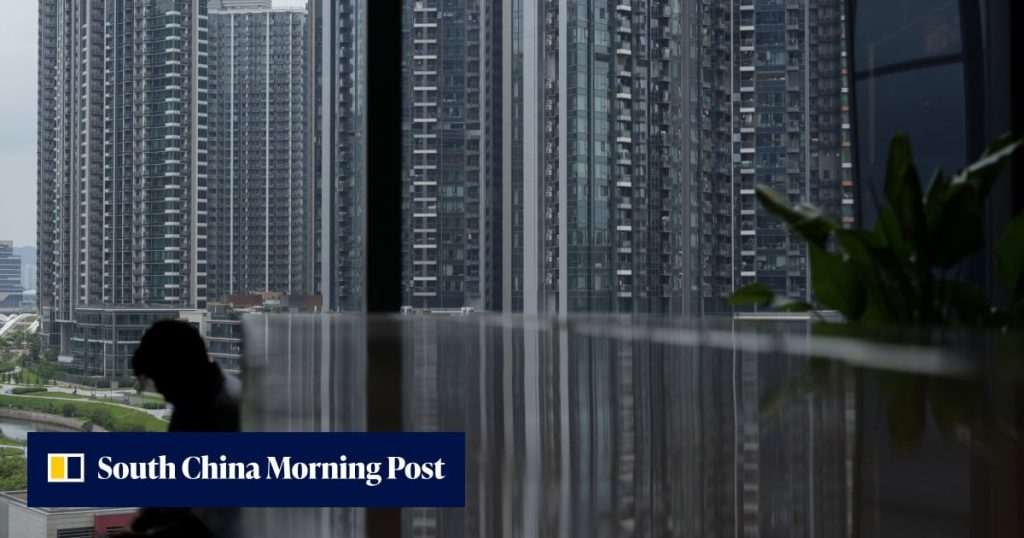

Hong Kong, China – Hong Kong’s property developers are adopting a more reserved strategy for introducing new housing projects, signaling potential headwinds from Beijing’s recently reinforced capital-control regulations. This cautious stance arrives as the city’s housing market shows signs of recovery, with mainland Chinese buyers playing a pivotal role.
Mainland Chinese purchasers have significantly influenced Hong Kong’s residential sector since the removal of stamp duties in 2024. Research and consultancy firm Savills Hong Kong indicates that these buyers constituted approximately one-third of all home acquisitions in the city.
Between January and April of 2026, mainland Chinese buyers secured 5,777 homes, a figure that exceeds 41% of the total transactions recorded for the entirety of 2025, according to data compiled by Midland Realty based on official records.
The velocity of mainland Chinese purchasing activity saw a notable acceleration in April 2026. Registrations for deals involving mainland buyers experienced a month-on-month increase of nearly 48%, reaching 1,892 transactions. This represented the highest monthly transaction volume in two years.
In tandem, the aggregate value of these transactions rose by close to 31%, attaining HK$18.9 billion (US$2.4 billion), which was a 17-month peak. Over the initial four months of 2026, the cumulative value of purchases by mainland buyers reached HK$61.6 billion.
This amount is equivalent to 45% of the HK$137.9 billion recorded for the full year 2025, as reported by Midland Realty.
The subdued approach by developers to launching new projects occurs at a juncture when the Hong Kong housing market has demonstrated restorative elements. The intricate relationship between Beijing’s tightened capital controls and the sustained demand from mainland buyers will be under intense scrutiny in the ensuing weeks and months.
The market reception and sales performance of upcoming property developments are poised to serve as an early barometer for developers’ capacity to navigate these evolving financial regulations while sustaining market momentum.
Beijing’s strengthened capital-control rules, designed to manage cross-border financial flows and bolster domestic economic stability, cast a significant shadow over Hong Kong’s property market. As a primary conduit for mainland capital, the city’s housing sector is inherently susceptible to alterations in these policy frameworks.
The recent upswing in mainland buyer engagement, spurred by the earlier removal of stamp duties, had provided a substantial impetus. However, the imposition of more stringent controls could now curtail the availability of funds for property investments, potentially leading to a moderation in demand.
The ramifications extend to Hong Kong’s property developers, who depend on a consistent influx of both local and mainland purchasers. A reduction in mainland buying activity could compel developers to introduce further incentives or adjust their pricing strategies.
This scenario might also influence overall transaction volumes and the tempo of new project completions, impacting the broader economic sentiment within the city. The enduring consequences will hinge on the precise nature and duration of the capital controls, alongside the Hong Kong market’s adaptability to these shifting conditions.

Written by
Tumisang Bogwasi, Founder & CEO of Brimco. 2X Award-Winning Entrepreneur. It all started with a popsicle stand.