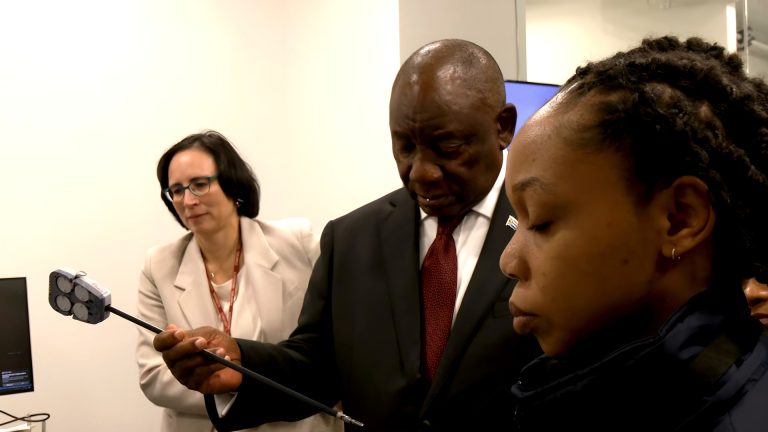
Botswana President Duma Boko is urging structural reforms to pivot the economy away from diamond dependence, but commercial enterprises face heavy bureaucratic friction and tight credit from commercial banks.
GABORONE, Botswana: President Duma Boko convened business leaders this week to demand a structural shift away from diamond mining reliance while regulatory barriers delay private capital deployment. The head of state emphasized that public-private cooperation must unlock stagnant domestic reserves into industrial ventures. High compliance hurdles continue to limit enterprise expansion across commercial sectors.

Diamond mining historically underpins national output and government revenue, as detailed in the World Bank economic overview. Global price volatility and finite mineral deposits compel policymakers to accelerate growth across manufacturing, digital technology, and agriculture. The administration seeks an investment framework where autonomous enterprises generate employment without perpetual state tender support.
Structural transition confronts resistance from systemic administrative hurdles highlighted at the Second Presidential Business Roundtable. Executives report that prolonged licensing timelines and opaque compliance mandates discourage long-term corporate funding. Without targeted institutional deregulation, efforts to build an alternative industrial base will stall.
Credit rationing hampers non-mining operators attempting to expand domestic operations. Commercial lenders apply strict underwriting terms to diversified commercial ventures, viewing non-diamond ventures as higher default risks. This structural financing gap deprives small and medium-sized enterprises of the liquidity required to scale manufacturing capacity.
The government announced plans to streamline the legal framework governing commercial operations and credit guarantees. Authorities intend to compress corporate registration timelines and enhance transparency across competitive state procurement programs. Market participants maintain that durable economic stabilization requires translating these roundtable discussions into enforceable statutory regulations.
Botswana serves as a benchmark for sovereign stability across the Southern African Development Community. A successful diversification model could guide neighboring resource-reliant economies attempting to insulate fiscal balances from volatile mining cycles. Sovereign credit ratings throughout the region remain sensitive to single-commodity export concentration.
A broader export base protects the Botswana pula against volatile global diamond pricing cycles. Effective regulatory reform can attract cross-border capital inflows into clean energy, agro-processing, and logistics networks. Sustainable non-commodity export revenue will reinforce sovereign foreign exchange reserves and protect long-term domestic debt sustainability.
People in this story: Duma Gideon Boko

Written by
Tumisang Bogwasi, Founder & CEO of Brimco. 2X Award-Winning Entrepreneur. It all started with a popsicle stand.