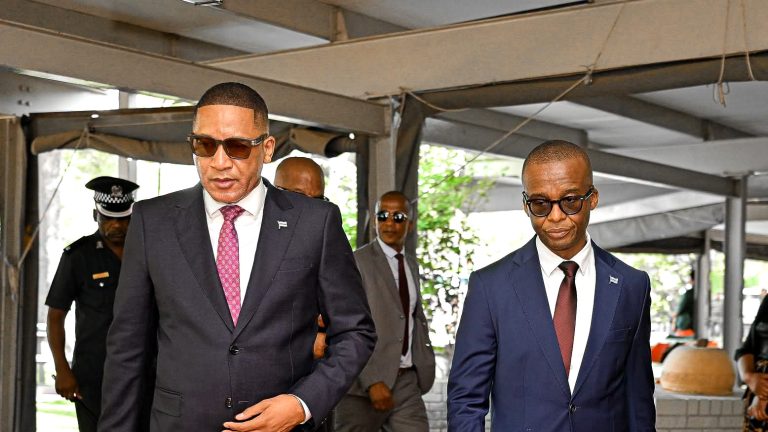
Captain Ibrahim Traoré inaugurated the Académie Technologique du Faso on 23 November. The first phase was budgeted at 37.37 billion CFA francs from the 2025 state budget. Mining and metallurgy are among 11 fields of study.
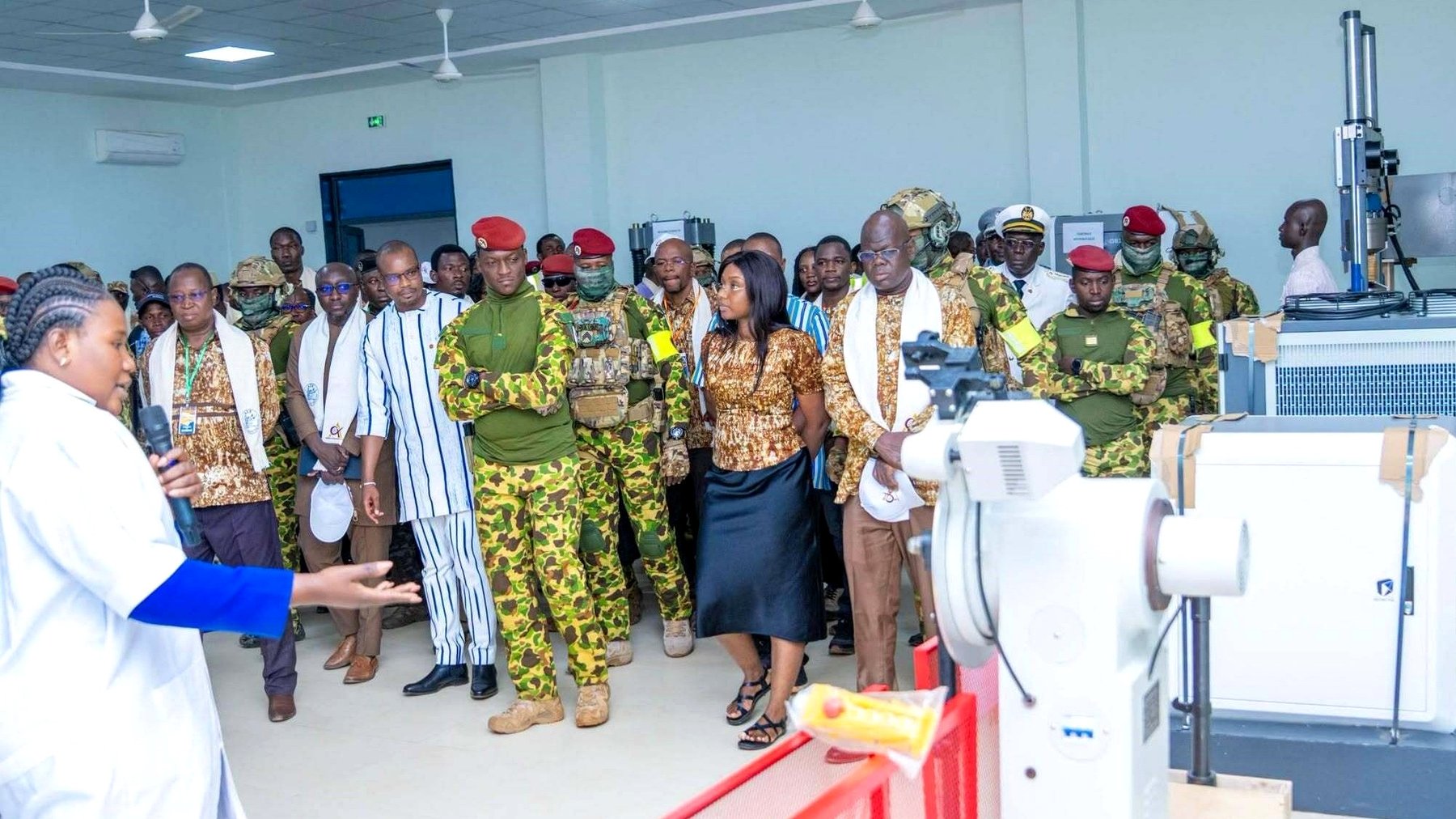
PABRÉ, Burkina Faso: Captain Ibrahim Traoré opened a new state technology academy on Monday. The campus is meant to train Burkinabè engineers as the military government tightens control of the country’s gold industry.

Sources: Council of Ministers PP-G N°038-2025; AIB; BiFinances; Chamber of Mines; RAFFINOR-BF.
The Académie Technologique du Faso stands at Pabré, a rural commune on the outskirts of Ouagadougou, and is attached to the presidency. It falls under the Presidential Initiative for Quality Education for All, known as IPEQ.
Mining trades and metallurgy are two of 11 fields listed when the cabinet approved the project. The others include mechanics, energy, nuclear studies, aeronautics, civil engineering, chemistry, digital technology, cybersecurity and telecommunications.
A Council of Ministers record dated 17 December 2025 set the first phase at 37,369,648,089 CFA francs, tax included. The same record said the work would be funded from the 2025 state budget.
That official figure is about 57 million euros at the West African CFA franc’s fixed rate to the euro. English-language reports have put the cost at about $66 million.
The first phase covers a campus of about 60 hectares. It includes teaching blocks, lecture halls, a library, workshops, laboratories, a forge, student and staff housing, a refectory and sports facilities.
Hamidou Sawadogo, executive director of the National Bureau of Major Projects, said the work was financed from national resources, without borrowing. He said 11 Burkinabè firms carried out the build, according to BiFinances.
The same account put the workforce at 1,435 workers and 65 interns.
Officials said construction began in December 2025 and was finished in about 11 months.
That was ahead of a 12-month schedule, according to local reports. The government’s information service said the academy was built in less than a year.
The academy admitted 250 students who hold scientific or technical baccalaureate qualifications, selected in August, according to official and local reports. They will live on campus and complete a two-year preparatory cycle before specialising.
AIB, the state news agency, said teaching is meant to be practical. Traoré acknowledged that laboratories would be equipped over time and that specialist scientific equipment would require substantial further spending, according to APA.
According to APA’s account of the speech, Traoré said: “The day you produce your first engines, I will feel pride. The day you present me with your first turboprop engines, I will feel pride.”
A student spokesperson said, “We will take our training seriously and we will take care of this campus,” APA reported.
Traoré also said more than 1,000 Burkinabè and foreign teachers had already applied to teach at the academy.
The opening comes as the military authorities tighten the state’s hold on gold, Burkina Faso’s main export. Traoré took power in a 2022 coup and has made resource “sovereignty” a central theme of his government.
In June 2025, Reuters reported that Burkina Faso had completed the transfer of five gold assets to the state miner SOPAMIB. The package included the operating Wahgnion and Boungou mines, plus three exploration licences, previously held by Endeavour Mining and Lilium.
A new mining code, law 016-2024/ALT of 18 July 2024, underpins that shift. The government also opened RAFFINOR-BF, the country’s first gold refinery, in Ouagadougou on 28 September 2026.
The company said the first phase can refine 164 tonnes of gold a year, on an investment of more than 11 billion CFA francs. It said capacity could later rise to 515 tonnes.
Prime Minister Rimtalba Jean Emmanuel Ouédraogo told the transitional legislature in January 2026 that national gold output exceeded 94 tonnes the previous year. Nearly 43 tonnes of that came from artisanal and semi-mechanised mining, according to the Chamber of Mines’ account of the speech.
That mix matters. The 2025 jump was not only a story of industrial mines now under state control.
A large share came from smaller, often harder-to-tax and harder-to-secure operations, including in areas affected by the country’s jihadist insurgency.
The academy is a training school, not a mine or a factory. A first cohort of 250 students, with two years of preparatory study still ahead, will not change the skills mix of the gold industry in the near term.
Laboratories are not yet fully equipped, on the president’s own account. The government’s claim that the academy will deliver industrial and technological sovereignty should be read as an ambition, not a result already in hand.
Burkina Faso is also one of several Sahel governments that have nationalised or squeezed foreign-owned gold mines. Mali and Guinea have tightened their own grip on artisanal and industrial gold, as Brimco has reported, and Egypt is trying to bring informal gold miners into a state-backed licensing system.

Written by
Tumisang Bogwasi, Founder & CEO of Brimco. 2X Award-Winning Entrepreneur. It all started with a popsicle stand.