China Reserves Right to Act and Japan Calls US Tariff Plan “Regrettable”
Beijing said it reserves the right to take "necessary measures", Tokyo rejected the US excess-capacity finding, and Singapore said it was "very disappointed". The tariffs are proposals only.
BEIJING, China: China said it reserves the right to take “necessary measures” after the United States proposed new tariffs on 14 economies, and Japan called the plan “regrettable”. Several Asian governments disputed Washington’s claim that they have excess factory capacity.
Highlights
- China’s commerce ministry said on 26 November that it reserves the right to take “necessary measures” over the proposed US tariffs.
- Japan’s chief cabinet secretary said Japan has no “structural excess production capacity” and called the proposal “regrettable”.
- Singapore said it was “very disappointed”, while Vietnam, Malaysia and Thailand said they would seek better terms in talks.
- The tariffs are proposals only, with a US public hearing set for 25 January.
Key numbers
- Economies on the US list: 14 (USTR, 25 November 2026)
- China: proposed extra tariff of up to 20%
- Japan: proposed rate of up to 15%, against 12.5% now; up to 20% if the US judges compliance unsatisfactory (CNA, citing Reuters)
- Indonesia, Malaysia, Thailand and Singapore: proposed ceilings of up to 18% to 20% (CNA)
- Public hearing: 25 January 2027; US-China truce expires 10 January (CNA)
Sources: USTR, Reuters via CNA, Xinhua, RTHK (AFP/Reuters), 25 and 26 November 2026. All rates are proposals, not final orders.
The Office of the US Trade Representative proposed the tariffs on 25 November under Section 301, after a probe into what it calls structural excess capacity. Brimco reported the US proposal and the 14 economies named on Wednesday.
China warns it may retaliate
Commerce ministry spokesperson He Yadong said citing “overcapacity” was a “pretext for protectionism”, RTHK reported. “China urges the United States to correct its erroneous practices and return to the right track of resolving issues through dialogue and consultation,” he said.
“China will closely monitor developments and reserves the right to take necessary measures to firmly defend its legitimate rights and interests,” He added. He also urged Washington to speed up internal procedures so a $60 billion tariff cut arrangement can take effect.
Foreign ministry spokesperson Guo Jiakun said, “Tariff wars and trade wars serve no one’s interests,” according to The Hill. The Chinese side spoke as an uneasy US-China truce nears its 10 January expiry, CNA reported.
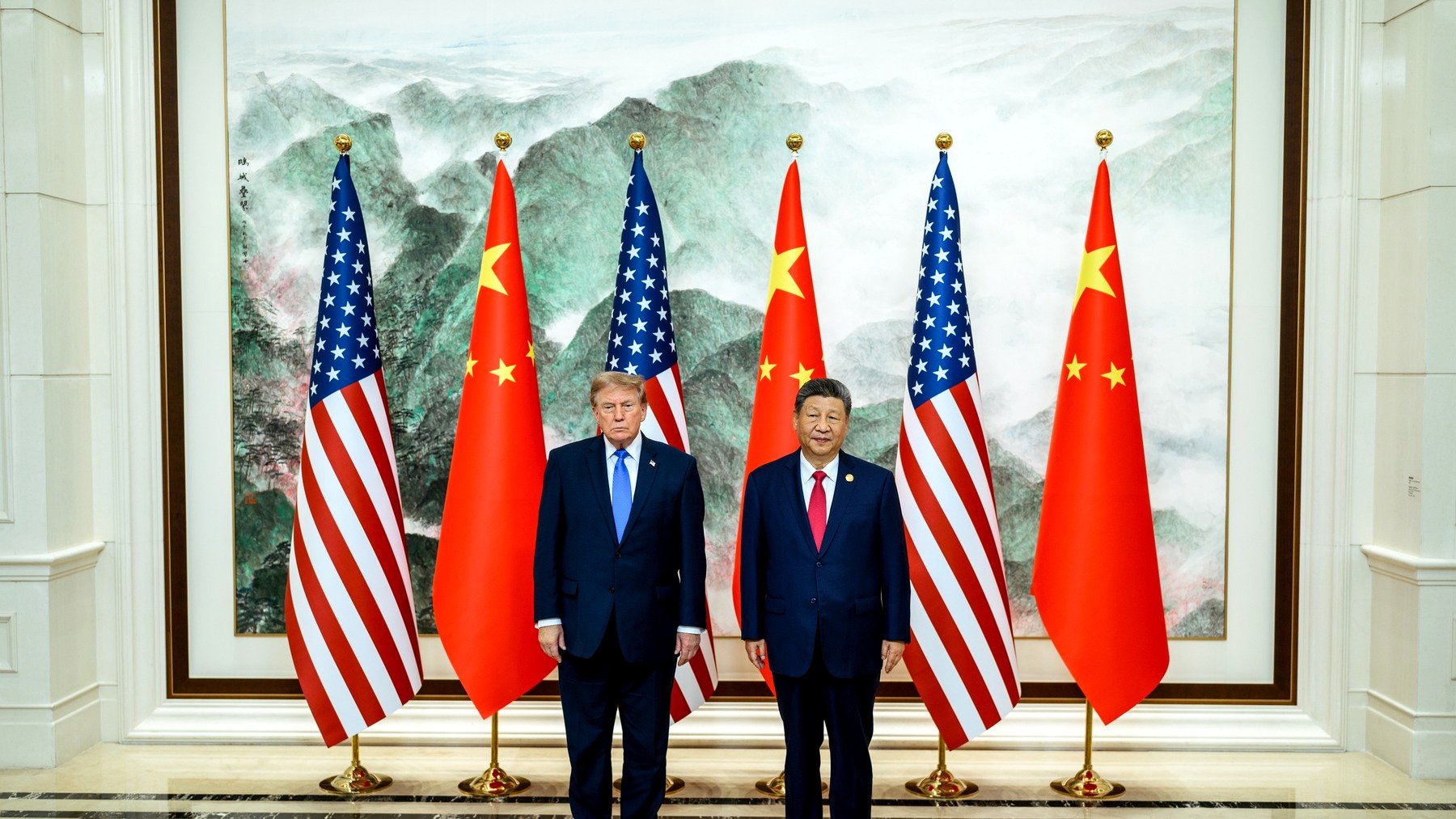
President Donald Trump and Chinese President Xi Jinping met at the APEC summit in Shenzhen last week, and are due to meet again at the G20 summit in the US in December, CNA said.
Japan rejects the premise
Japan’s top government spokesman, Chief Cabinet Secretary Minoru Kihara, rejected the US finding. “Japan does not have any non-market policy practices or structural excess production capacity,” he said.
“It is regrettable that a proposed measure targeting Japan has been announced in spite of this,” Kihara added. The US proposed tariffs of up to 15 per cent on Japanese goods, up from the current 12.5 per cent, CNA reported.

Other Asian governments split between protest and talks
Singapore’s trade ministry said it was “very disappointed” and that the findings ignored its open economy. “Singapore’s economic policies do not protect our domestic market or subsidise manufacturing for export,” it said, according to CNA.
India said it has no structural excess capacity in any sector and wants an early trade deal. Malaysia denied the finding but said it would review third-country imports.
Vietnam, Thailand, Indonesia and South Korea took a more negotiating line, CNA reported. Vietnam said it is working to finalise a trade agreement as soon as possible, and Thailand said it would seek a rate below 18 per cent.
What it means for African exporters
None of the 14 named economies is in Africa, according to Brimco’s earlier report on the USTR list. The duties could still affect African exporters and import prices through China and the European Union, two of the continent’s largest trading partners.
USTR still has to take comments and hold hearings, and the final rates could differ. Vietnam said it expects a final decision in February or March.
Sources
- Associated Press video: China and Japan hit back at Trump’s new tariff plans (26 November 2026)
- Xinhua: China firmly opposes U.S. additional tariffs on China, other economies: commerce ministry (26 November 2026)
- RTHK: Commerce Ministry slams new US tariffs (AFP/Reuters, 26 November 2026)
- CNA: Asian governments push back, seek deals after Trump’s new tariff salvo (26 November 2026)
- The Hill: China, Japan, others condemn Trump administration over new tariff threat (26 November 2026)
- Associated Press: China and other US trading partners hit back at Trump’s new tariff plans (26 November 2026)
- USTR: determinations and proposed actions in 14 Section 301 investigations (25 November 2026)
People in this story: Donald J. Trump

Written by
Tumisang Bogwasi
Tumisang Bogwasi, Founder & CEO of Brimco. 2X Award-Winning Entrepreneur. It all started with a popsicle stand.