NASA is preparing a mission utilizing a 'LINK Spacecraft' to enhance the operational capabilities and extend the lifespan of its Neil Gehrels Swift Observatory. While specific details about the LINK spacecraft remain undisclosed, the initiative aims to bolster the nearly two-decade-old astrophysics satellite, crucial for studying gamma-ray bursts.
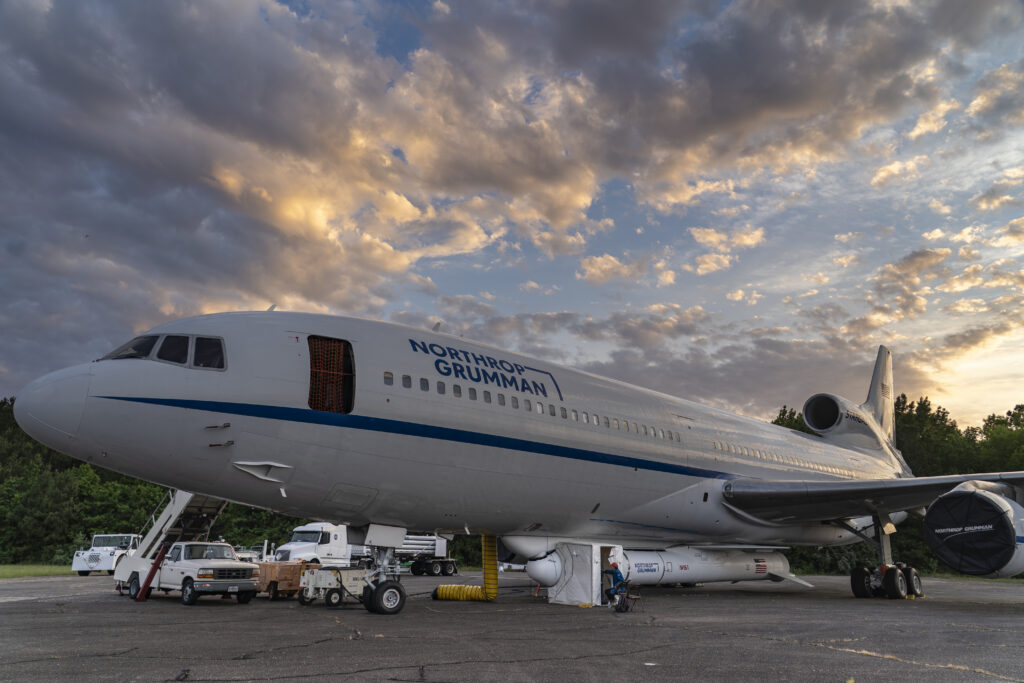
WASHINGTON, D.C., United States – NASA is preparing for a mission involving a ‘LINK Spacecraft‘ aimed at boosting the operational capabilities of its Neil Gehrels Swift Observatory, a key asset in astrophysics research. While specific details regarding the LINK spacecraft’s design and operational procedures remain largely undisclosed by the agency, the initiative underscores efforts to extend the lifespan and enhance the utility of critical orbital assets.

Launched in 2004, the Neil Gehrels Swift Observatory, initially known as the Swift Gamma-Ray Burst Explorer, has been instrumental in detecting and studying gamma-ray bursts (GRBs). These powerful cosmic explosions provide crucial insights into the evolution of stars and the universe itself. Swift’s multi-wavelength instruments, including X-ray and ultraviolet/optical telescopes, allow for rapid follow-up observations of these transient events.
The concept of ‘boosting’ an existing satellite typically involves orbital maneuvers to raise its altitude, resupply consumables, or perform on-orbit repairs. Such missions are designed to extend the operational life of spacecraft, thereby reducing the need for costly replacements and ensuring the continuity of invaluable scientific data. The precise nature of the ‘boost’ operation for Swift by the ‘LINK Spacecraft’ has not been publicly detailed by NASA.
Extending Swift’s mission life would enable continued monitoring of transient astronomical phenomena, potentially leading to new discoveries in cosmology, stellar evolution, and the elusive electromagnetic counterparts to gravitational wave events. Its prolonged operation supports long-term data collection, which is essential for understanding dynamic cosmic processes over extended periods.
This mission, if successful, could establish significant precedents for future satellite servicing operations, influencing global aerospace strategies for maintaining and upgrading existing space infrastructure. It underscores the increasing economic and scientific rationale behind extending the operational life of high-value space assets, offering an alternative to solely relying on new launches for mission continuity.
The development and implementation of advanced orbital servicing technologies, such as those potentially embodied by the ‘LINK Spacecraft,’ foster innovation in fields like robotic systems, autonomous navigation, and advanced propulsion. This technological advancement can drive growth within the global space industry, encouraging further investment and development in space-based services.
Ensuring the continued function of observatories like Swift provides uninterrupted data streams that are vital for the global astronomical community. This sustained data contributes directly to a broader understanding of fundamental cosmic processes, enhancing international academic research and scientific publications across various fields of astrophysics.
The impending mission involving the ‘LINK Spacecraft’ to support the Neil Gehrels Swift Observatory represents a strategic effort to preserve and enhance invaluable scientific infrastructure in Earth orbit. Further details regarding the LINK spacecraft’s specific role and the mission timeline are anticipated from NASA, with the initiative poised to make significant contributions to the future of high-energy astrophysics.

Written by
Tumisang Bogwasi, Founder & CEO of Brimco. 2X Award-Winning Entrepreneur. It all started with a popsicle stand.