The Botswana-owned contractor has added tailings-facility work to its boxcut contracts on the roughly $900 million project, supporting about 300 jobs. MMG has not separately confirmed the new scope.
GABORONE, Botswana – Botswana-owned mining contractor Meropa Resources has been awarded additional civil work at MMG’s Khoemacau copper mine expansion, extending its role from underground mine access to the tailings storage facility. The new scope was reported by The Projects Magazine on 15 November, citing Meropa technical director and shareholder Fortune Diamond. MMG has not separately confirmed the contract amendment, and no contract value was disclosed.

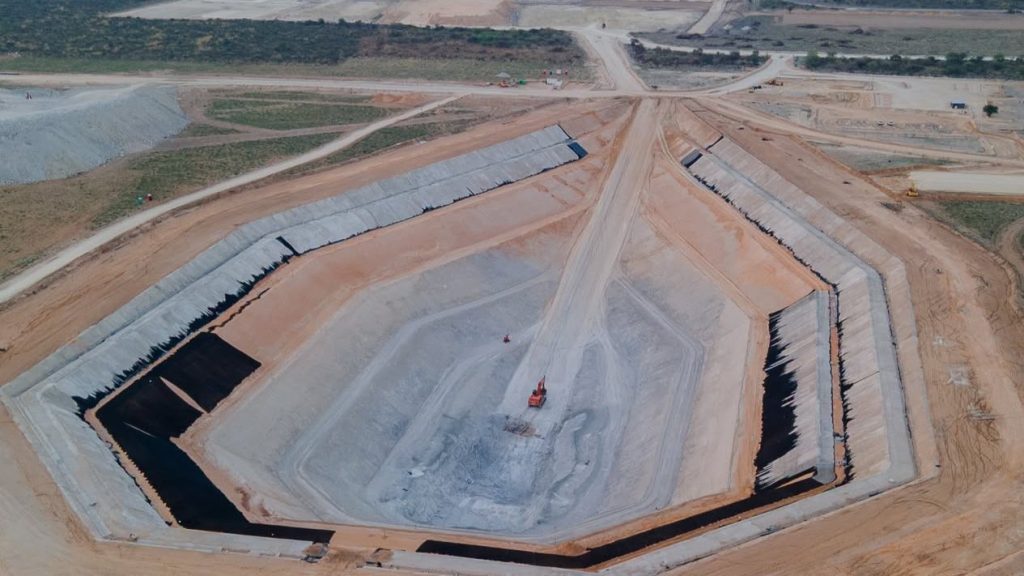
The additional work covers vegetation clearing, bulk excavation and liner installation at the tailings facility. Meropa was already responsible for bulk excavation at two of the project’s four boxcuts and slope support at three: the Mango boxcut and the two Zeta boxcuts. (The Projects Magazine spelled the deposit “Maango”; MMG’s official name is Mango.)
Diamond told the magazine that Zeta Central excavation was due for handover by 20 November, and that Zeta North was nearing 90% completion, with handover expected by the end of November. Those dates are contractor targets, not independently confirmed handovers. At Mango, slope support on the first two benches had been completed, with further benches planned in November before ramp and drainage work.
A boxcut is a large surface excavation that creates a controlled entry into underground workings, so that declines can be driven for people, equipment and ore. The Khoemacau expansion includes new underground mining at Zone 5 North, Mango and Zeta North-East.
Diamond said CEDA and FNB Botswana had provided working-capital support, and that Babcock Volvo Botswana had financed equipment. “We must thank CEDA for the working capital and FNB Botswana for also coming on board and giving us quite significant capital for this project, and I must also thank, Babcock Volvo Botswana who also supported equipment acquisition through its in-house financing arrangements, helping us acquire approximately 80 per cent of the equipment used on site,” he said.
SADC Mining & Construction News reported in April that CEDA had backed equipment purchases for Meropa’s Khoemacau contracts, which is consistent with that account.
The contractor’s Khoemacau work supports about 300 employees, Diamond said, with about 100 on slope support and the rest on excavation and tailings work. Some general workers have been recruited through village kgotlas. The magazine also reported that NKK supplies staff transport, that accommodation is being taken in Sehithwa and Toteng, and that catering and other services have been subcontracted. Those arrangements show how a large mine contract can feed local suppliers, though the benefits will depend on whether the work continues after construction.
“With a Phase Three expansion anticipated, alongside other mining and infrastructure projects, we hope to remain part of the mine’s future development,” Diamond said.
MMG announced the expansion groundbreaking on 9 February 2026, after board approval in December 2025. It estimates capital expenditure at about $900 million, including spending before 2026. The project includes a new 4.5-million-tonne-a-year processing plant. Total milling capacity is expected to exceed eight million tonnes a year. MMG is targeting 130,000 tonnes of contained copper in concentrate a year, and more than four million ounces of silver, with first concentrate from the expansion in the first half of 2028. A further increase toward 200,000 tonnes a year has been identified but still requires more study and an investment decision.
For Botswana, the interest is whether citizen-owned contractors can move from basic services into specialised earthworks, underground access and tailings work on a project of this size. Access to equipment finance is often the barrier. Measuring the economic contribution will require evidence of delivery, lasting skills and further contracts, not only the current headcount.
Mineral revenue’s share of the budget has already narrowed, which is why new copper production in the Kalahari Copper Belt is being watched as a second mining pillar.
What to watch next is whether the November boxcut handovers take place on the dates Meropa has given, and how the new tailings work proceeds as MMG drives toward first additional concentrate in the first half of 2028.

Written by
Nonofo Joel, a Business Analyst at Brimco, has a passion for mineral economics and business innovation. He also serves on the Lehikeng Board as a champion of African human capital growth.