NASA's Chandra X-ray Observatory has potentially identified a new supernova remnant within the Milky Way's galactic core, offering new perspectives on high-energy events and stellar evolution in this complex astronomical region.
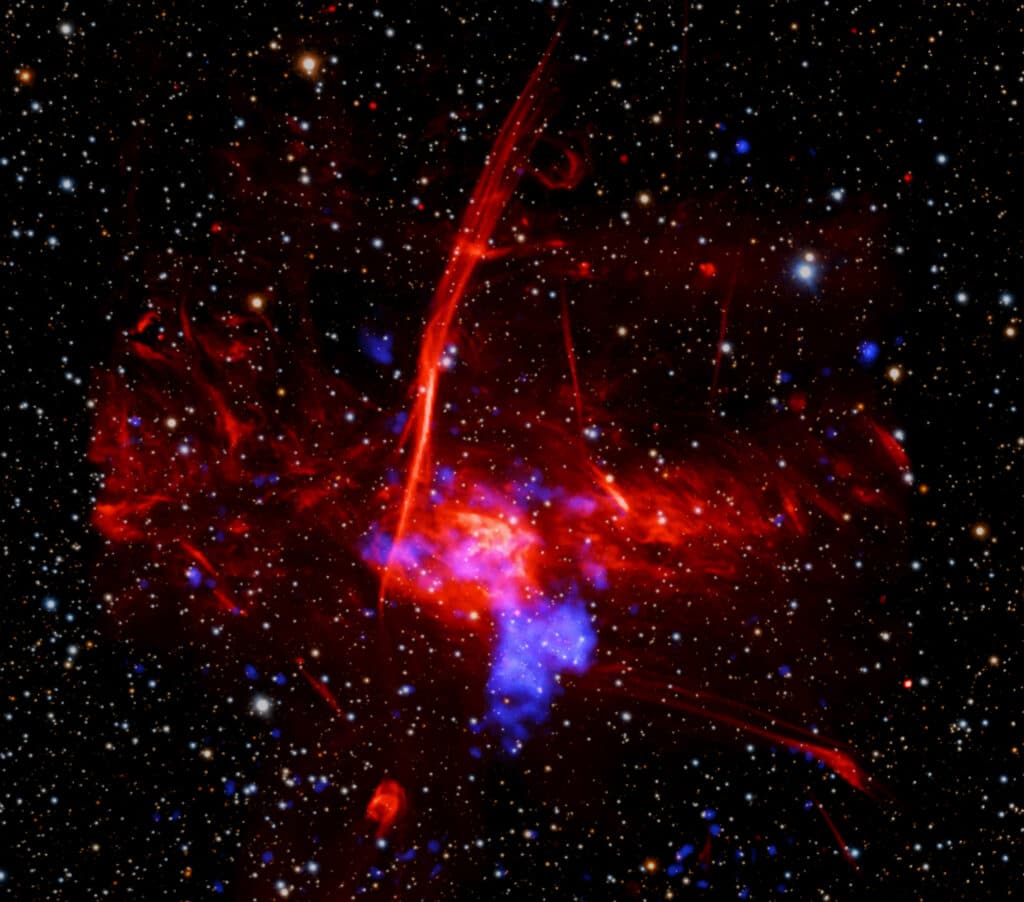
WASHINGTON, D.C., United States – NASA’s Chandra X-ray Observatory has identified a potential supernova remnant situated within the Milky Way’s galactic center, marking a significant discovery for astrophysics. This finding could provide critical data for understanding the dynamics of stellar life cycles and the distribution of heavy elements in the galaxy’s densest region, according to a recent NASA Science mission update.

NASA’s Chandra X-ray Observatory, a flagship mission launched in 1999, specializes in detecting X-ray emissions from extremely hot regions of the universe, such as supernova remnants, galaxy clusters, and matter around black holes. Its high-resolution imaging capabilities are crucial for distinguishing faint objects in crowded fields like the galactic center.
The galactic center is a challenging region for observation due to dense clouds of gas and dust that obscure visible light. X-ray telescopes like Chandra can penetrate these obstructions, revealing previously hidden objects and events. Supernova remnants are the expanding shells of gas and dust left behind after a massive star explodes, often enriching the surrounding interstellar medium with new elements.
Identifying new supernova remnants in this area is vital for astronomers to trace the history of star formation and death in our galaxy’s core. These explosions are significant drivers of galactic evolution, influencing the birth of new stars and the overall chemical composition of the galaxy.
The detection of this possible supernova remnant holds substantial implications for theoretical astrophysics, particularly models concerning galactic chemical enrichment and the energy balance within the Milky Way’s central region. Supernovae are primary sources of elements heavier than hydrogen and helium, which are essential for planet formation and life. Pinpointing their remnants allows scientists to map where these elements are dispersed.
Furthermore, understanding the frequency and distribution of supernova events near the supermassive black hole Sagittarius A* can shed light on the extreme conditions and energetic processes occurring there. This data contributes to a more complete picture of how galaxies, including our own, have evolved over cosmic timescales and how their central engines influence their overall structure.
This discovery reinforces the value of long-term observation missions like Chandra, which continue to deliver groundbreaking insights into the high-energy universe. Ongoing research will likely involve further analysis of the remnant’s characteristics, including its age, expansion rate, and interaction with the surrounding interstellar medium, using data from multiple observatories.

Written by
Tumisang Bogwasi, Founder & CEO of Brimco. 2X Award-Winning Entrepreneur. It all started with a popsicle stand.