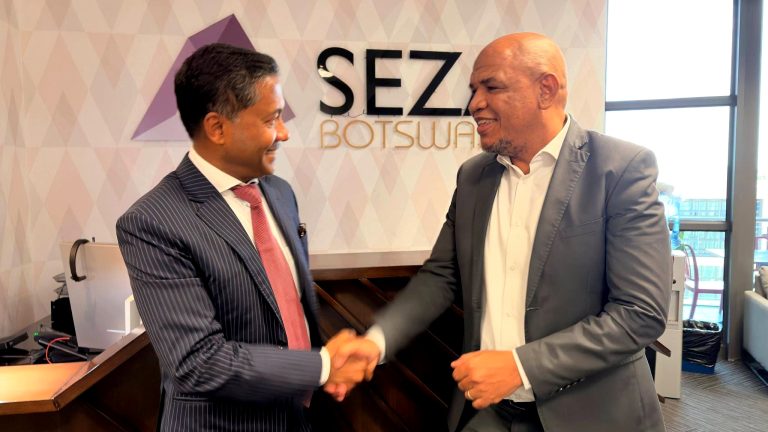
Chairman Yoram Dvash said the state diamond trader sold 8.11 million carats from January, more than double last year’s volume. He did not publish a profit figure.
GABORONE, Botswana – Botswana’s state-owned Okavango Diamond Company has returned to profitability after a rise in sales and buyer numbers, chairman Yoram Dvash said in a statement reported on 16 November. He did not publish a profit figure.

Since January 2026 the company has sold 8.11 million carats, generating $645.2 million in revenue, more than double last year’s sales volume, Dvash said. The Projects Magazine, reporting the same figures, said the sales were made between January and October 2026. Reuters, citing government statistics, said ODC’s revenue for the whole of 2025 was $457 million.
The figures matter because ODC is the state’s own channel for selling a growing share of Debswana production. Debswana is the 50:50 mining venture between the Botswana government and De Beers. Under the sales agreement signed in February 2025, ODC will sell 30% of Debswana production, up from 25%, a share scheduled to reach 40% after five years, and 50% if the agreement is extended. De Beers continues to market the rest.
The recovery comes in a weak natural diamond market. Rough prices have been under pressure since mid-2023 because of oversupply, softer demand and competition from laboratory-grown stones. Keith Jefferis has described Botswana’s diamond slump as structural rather than cyclical. Mineral revenue’s share of the budget has already narrowed, as set out in the 2027/28 Budget Strategy Paper.

Between August and October, ODC held three spot auctions — one-off sales of rough diamonds at market-driven prices — and sold about 1.85 million carats for $147.2 million, Dvash said. Reuters and a longer account of the same statement both use 1.85 million carats. The auctions attracted an average of 167 registered buyers a sale, 17% more than a year earlier, and all three ranked among the five best-attended sales in ODC’s history.
During the three most recent auctions, 272 customers bought diamonds from ODC. Parcels sold to Botswana businesses through citizen tenders rose 45% year on year, and sales of the company’s largest and rarest diamonds increased by more than 50%, the chairman said.

“These achievements are particularly significant given the difficult global market conditions,” Dvash said. “They reflect the dedication and professionalism of our management team and employees, as well as the commitment of the new Board to strengthening ODC’s commercial performance and long-term competitiveness.”
The statement does not break out prices, margins or the profit amount behind the return to profitability. Those details would be needed to judge how durable the improvement is if prices weaken again or if the mix of goods changes.
Dvash also welcomed the government’s decision to raise Botswana’s shareholding in De Beers from 15% to 30% as part of the proposed sale of Anglo American’s stake, and congratulated the Global Diamond Consortium on being named preferred bidder. Botswana has said it intends to double that stake. Sheila Khama has argued that the country should weigh the cost and the rights that come with a larger holding.
“This is a significant step that will strengthen Botswana’s position in the global diamond industry and give the country greater influence over its future,” he said.
Looking ahead, he said ODC’s aim was “to transform ODC into a truly international diamond trading company and establish it among the world’s leading rough diamond trading companies.” He thanked Minerals and Energy minister Bogolo Kenewendo for her support of the new board.

For Botswana businesses, the immediate signal is that more Debswana goods are moving through a state sales channel, with a reported rise in citizen-tender parcels. The test is whether that channel can keep buyers, prices and profits when the market is difficult, and whether a larger official role in De Beers changes how value is captured at home.
What to watch next is any audited profit figure, the remaining auctions this year, and whether the higher Debswana sales share continues to find buyers at acceptable prices.

Written by
Nonofo Joel, a Business Analyst at Brimco, has a passion for mineral economics and business innovation. He also serves on the Lehikeng Board as a champion of African human capital growth.