Former President Donald J. Trump's appearance at Joint Base Andrews on July 1, 2026, brought renewed attention to the United States' presidential Air Force One fleet and the ongoing program to modernize it with new Boeing 747-8 based VC-25B aircraft. The event highlighted the strategic importance and significant federal investment in maintaining advanced executive air transport capabilities.
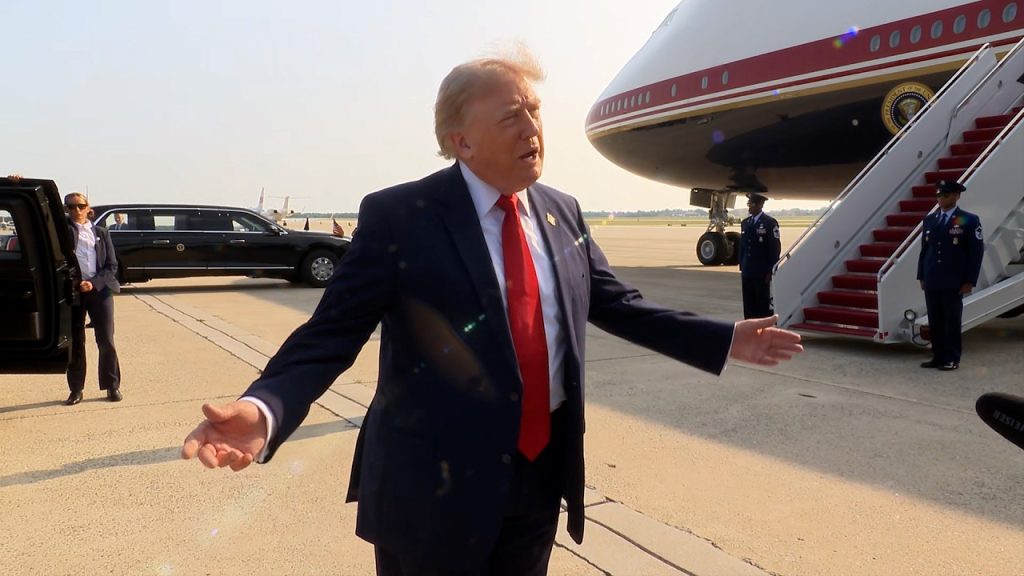
WASHINGTON, United States – Former President Donald J. Trump addressed reporters at Joint Base Andrews on July 1, 2026, an appearance that brought renewed public and media focus to the United States’ iconic Air Force One fleet and its ongoing modernization. The event underscored the strategic significance of the presidential air transport system as a symbol of national power and a critical component of American global leadership.

The specific content of Mr. Trump’s remarks during the press interaction was not immediately available, with the accompanying video from The White House YouTube lacking automated captions. However, the setting of Joint Base Andrews, a primary operational hub for presidential air travel, inherently linked the occasion to the Air Force One program and its future.
“Air Force One” is the air traffic control call sign for any U.S. Air Force aircraft transporting the President. The current primary aircraft, designated VC-25A, are highly customized Boeing 747-200B models. These aircraft are undergoing a replacement initiative to introduce two new VC-25B models, based on the more modern Boeing 747-8 platform.
This comprehensive program involves substantial modifications to incorporate advanced communications, robust self-defense systems, and heightened operational security measures.
It is important to clarify that while discussions surrounding the Air Force One fleet’s future are ongoing, the new VC-25B aircraft are currently under construction and modification.
Official sources, including public statements from Boeing, confirm these next-generation aircraft are not yet operational, with entry into service anticipated in the late 2020s. Therefore, any suggestion of a “first flight” by a former president on the new Air Force One on July 1, 2026, is not accurate based on available information.
The acquisition and upkeep of the Air Force One fleet represent a considerable federal expenditure, directly benefiting the United States’ defense contractors and the broader aerospace industry. This program, overseen by the U.S. Air Force, involves significant contracts with major companies such as Boeing, thereby supporting domestic job creation and fostering technological advancements within the manufacturing sector. This investment underscores the symbiosis between national security requirements and industrial economic growth.
Beyond its substantial economic footprint, Air Force One functions as a critical element of U.S. national security and diplomatic infrastructure. Its advanced capabilities enable the President to maintain command and control from any global location, ensuring secure communication channels and uninterrupted decision-making authority, particularly during national or international crises.
This mobile command center is indispensable for projecting American influence globally and facilitating agile diplomatic responses. The intricate nature of managing such a vital asset is continually refined through rigorous training and technological enhancements, as highlighted in comprehensive analyses of Air Force One operations.
This sustained level of investment highlights the strategic priority the U.S. government places on executive transport, recognizing it as more than a convenience but a cornerstone strategic asset.
The ongoing modernization program ensures that the symbol of American presidential power remains at the vanguard of aviation technology and security for future decades, aligning with broader U.S. defense and foreign policy objectives.
People in this story: Donald J. Trump

Written by
Tumisang Bogwasi, Founder & CEO of Brimco. 2X Award-Winning Entrepreneur. It all started with a popsicle stand.