Russia has confirmed negotiations for a major diesel supply agreement with the United States following a phone call between President Trump and President Putin, potentially shifting global energy trade dynamics.
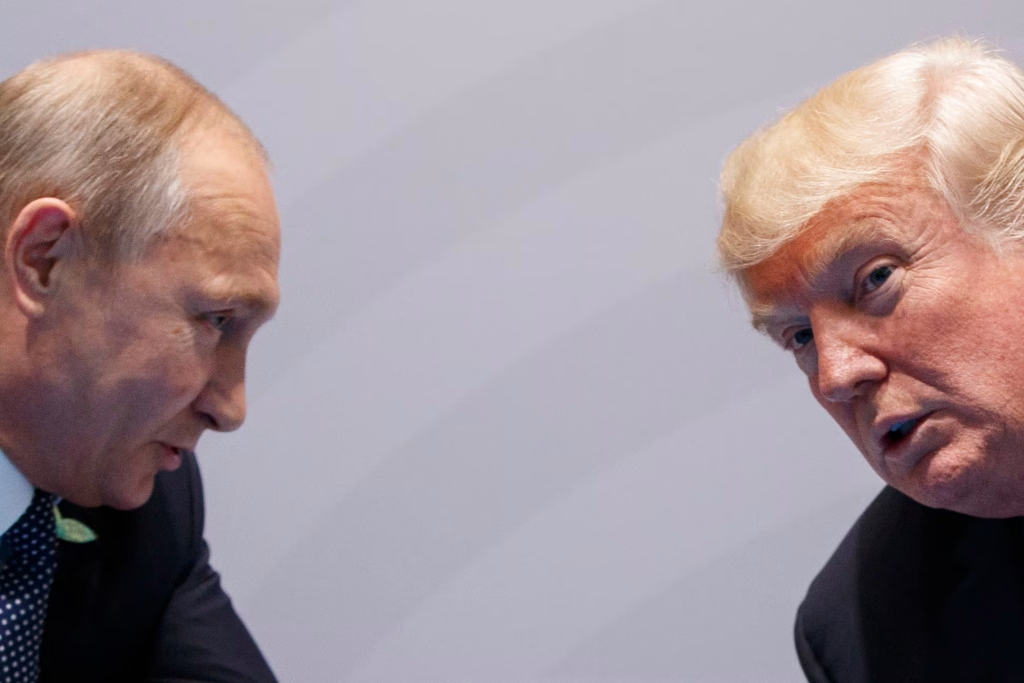
MOSCOW, Russia, Russia has confirmed it is currently negotiating a significant diesel supply agreement with the United States following a high-level telephone conversation between President Donald Trump and President Vladimir Putin. The move marks a potential shift in global energy trade routes as the US seeks to secure large volumes of refined fuel to stabilize domestic markets.
While the Trump administration claims Moscow is prepared to supply over 300,000 tons of diesel immediately, Russian officials maintain that the technical details of the deal are still being finalized. If ratified, the agreement would include additional shipments scheduled for November and extending into 2026.

The potential influx of Russian diesel carries significant weight for global energy pricing. For two years, Western sanctions and logistical hurdles have restricted Russian refined products, forcing buyers to seek more expensive alternatives. A direct US-purchase of Russian diesel could lower global benchmarks while simultaneously complicating supply chains for European allies of the US.
For African markets, this development presents a complex dual-edged sword. Many sub-Saharan nations rely on imported refined petroleum and diesel for industrial machinery and transport. If Russian supply is diverted toward the US, African importers may face increased competition for remaining global stocks, though a drop in global diesel prices could ease inflationary burdens across the African Development Bank.
The African Union and regional energy bodies are likely monitoring these shifts in trade policy closely. As the African Continental Free Trade Area (AfCFTA) aims to integrate regional markets, the sudden realignment of major energy powers could highlight the vulnerability of African energy security frameworks to external geopolitical shifts.
Russian sources indicate that the initial 300,000 ton figure represents the first phase of a larger procurement framework. The negotiations involve payment processing and insurance protocols to ensure the transactions do not conflict with existing US sanctions frameworks targeting Russian financial entities.
The Trump administration has emphasized the need for immediate delivery to prevent price spikes during the winter season. However, the Kremlin remains cautious about the timeline, noting that logistical arrangements for maritime transport must be verified before the first tanker departs port.

Written by
Tumisang Bogwasi, Founder & CEO of Brimco. 2X Award-Winning Entrepreneur. It all started with a popsicle stand.