Donald Trump's 'Freedom 250' event is drawing significant corporate sponsorship, primarily from companies with substantial regulatory or policy interests that could be impacted by a future Trump administration. This convergence raises questions regarding corporate influence and access in the American political landscape.
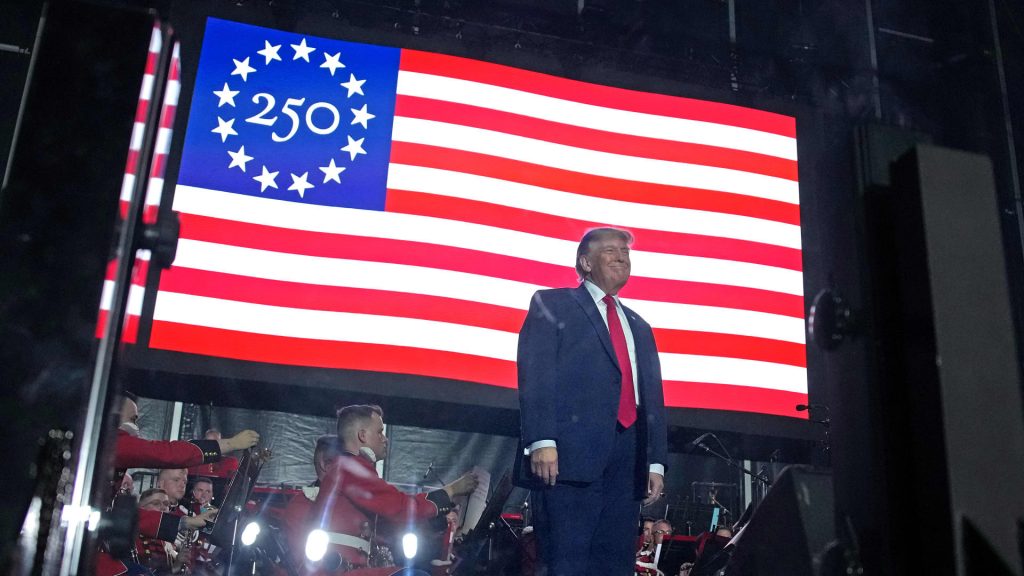
WASHINGTON, United States – Former President Donald Trump’s ‘Freedom 250’ event is attracting considerable corporate sponsorship, with numerous firms reportedly participating to gain proximity and potential influence ahead of a possible future administration. The event, positioned as a counterpoint to the official ‘America 250’ celebration, highlights the enduring nexus between political fundraising and corporate strategic interests in the nation’s capital, as reported by CNBC.

The ‘Freedom 250’ is described as a privately organized commemoration, distinct from the federally sanctioned ‘America 250’ bicentennial initiative. Corporations are reportedly contributing through various channels, including direct sponsorships and ticket purchases for exclusive access. This engagement offers a platform for executives to network with Donald Trump and his close advisors, potentially shaping future policy discussions.
Companies participating in the event often operate in sectors such as technology, financial services, energy, and defense, which face significant regulatory oversight or rely heavily on government contracts. Their involvement is widely interpreted as a proactive measure to establish relationships and advocate for their business priorities. Such strategic engagement is a common, albeit often scrutinized, practice within the Washington political sphere.
The practice of corporations supporting political figures with business before their administrations frequently sparks debate about transparency and potential conflicts of interest. While federal election laws strictly govern campaign finance, event sponsorships can sometimes operate within more ambiguous regulatory zones, providing access without falling under direct campaign contribution limits, as outlined by Federal Election Commission guidelines.
This influx of corporate funding into politically aligned events could significantly reshape the lobbying landscape in Washington. Industries with critical policy concerns, such as environmental regulations, trade policies, or antitrust enforcement, are particularly incentivized to engage with potential future administrations. This strategic engagement seeks to preemptively influence future legislative and executive actions, aiming to secure favorable business conditions.
Financial markets often react to perceptions of regulatory stability or change, and corporate efforts to influence policy can impact investor confidence. Companies investing in political access signal their intent to navigate or influence upcoming governmental shifts, potentially affecting sector valuations. The sustained focus remains on maintaining open communication channels with key political decision-makers, a common and longstanding strategy in the American political system.
The scale of corporate involvement in events like the ‘Freedom 250’ also raises broader questions about the fairness and accessibility of the political process. Critics often argue that such arrangements create an uneven playing field, where financial influence can disproportionately impact policy outcomes, favoring well-funded corporations over public interest groups or smaller businesses.
People in this story: Donald J. Trump

Written by
Tumisang Bogwasi, Founder & CEO of Brimco. 2X Award-Winning Entrepreneur. It all started with a popsicle stand.