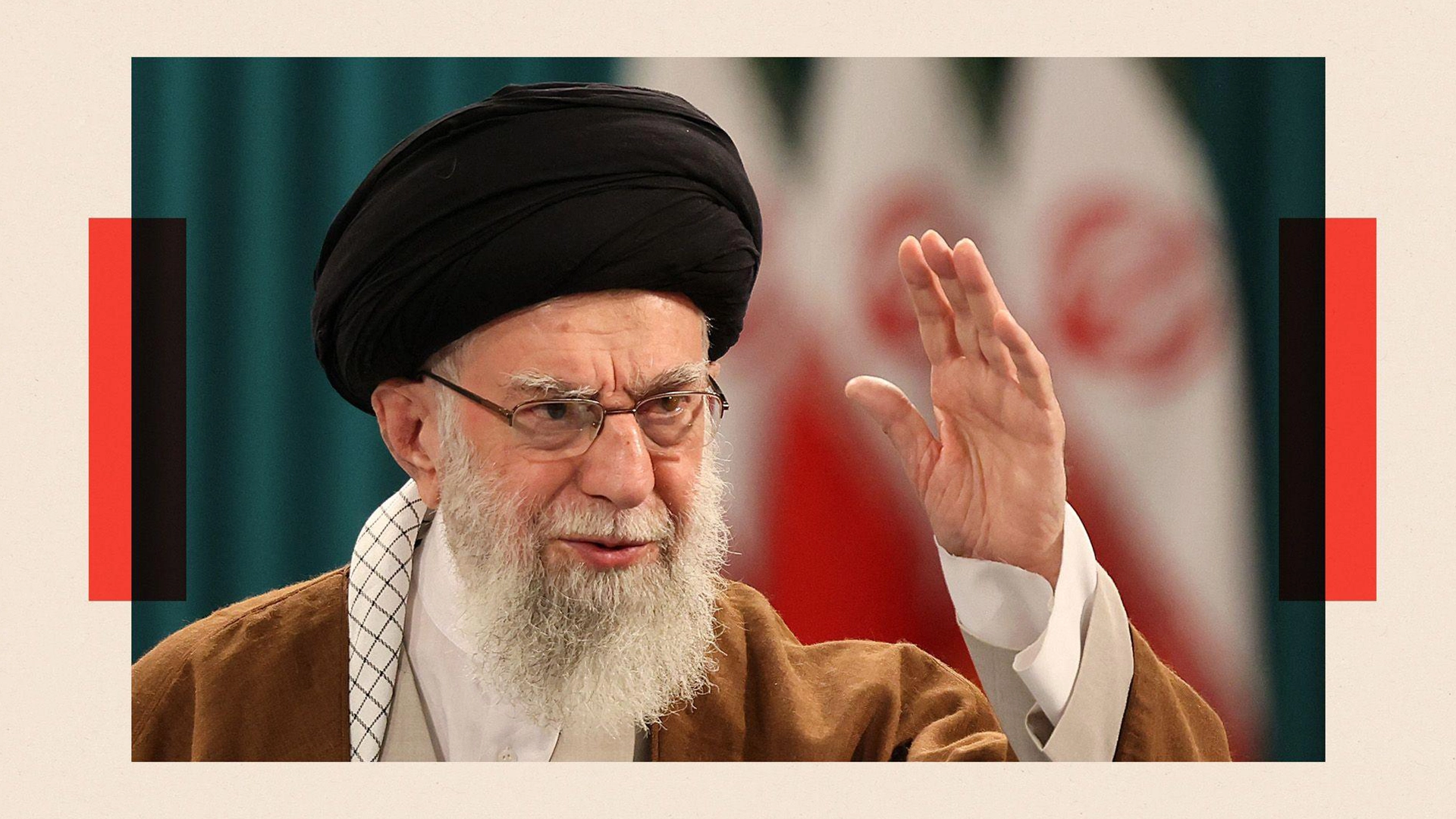
Ayatollah ali khamenei wearing a black turban and glasses raising his hand while speaking with the iranian flag behind him

The Post-Khamenei Era: Analyzing the Strategic and Market Fallout of Confirmed Leadership Change in Iran

With the Islamic Republic's leadership decapitated in a single U.S.-led intelligence strike, Crown Prince Reza Pahlavi is positioning to lead a democratic transition.

Written By: author avatar Tumisang Bogwasi
author avatar Tumisang Bogwasi
Tumisang Bogwasi, Founder & CEO of Brimco. 2X Award-Winning Entrepreneur. It all started with a popsicle stand.

The confirmation of the death of Iran’s Supreme Leader, Ayatollah Ali Khamenei, alongside an estimated 50 senior regime figures, marks the most significant political decapitation in modern history. This operation, executed by the United States and IDF (utilizing high-level CIA intelligence), represents the definitive climax of the Trump Administration’s shift from containment to an explicit regime change operation.

By providing the critical intelligence and the operational “green light” for Operation Epic Fury, Washington has made it clear that this is a once-in-a-generation opportunity for the Iranian people to be free and reclaim their sovereignty.

This is no longer a localized crisis; it is a materialized regime-collapse scenario. For institutional investors, the narrative has shifted from “Who is the next Ayatollah?” to “The end of the 1979 Order.” As President Trump addressed the nation, he emphasized that “the hour of your freedom is at hand,” signaling that the United States is fully backing the dismantling of the existing power structure.

This briefing analyzes the tension between the regime’s desperate constitutional maneuvers and the rising momentum for a democratic transition led by the exiled Crown Prince, empowered by this definitive American posture.

Highlights

  • Trump-Led Decapitation: The operation is credited to a massive intelligence surge from the Trump administration, which identified and tracked the 50 senior leaders to a single location, enabling the IDF strike.
  • The Pahlavi-Trump Alignment: Exiled Crown Prince Reza Pahlavi has explicitly thanked President Trump for “equalizing the playing field,” stating that the end of the regime is near and inviting a transition to democracy.
  • Systemic Collapse: Beyond Khamenei, the elimination of nearly 50 top-tier leaders creates an unfillable power vacuum across the IRGC, the judiciary, and the clerical councils.
  • Energy Market Shock: Brent crude remains highly volatile above the $100 mark as markets weigh the risk of a chaotic vacuum versus a pro-Western democratic pivot supported by Washington.
  • Geopolitical Realignment: The direct intervention signals a return to a “Security-First” U.S. policy in the Middle East, aimed at the total dismantling of the “Axis of Resistance.”

The Succession Battle: Constitutional Procedure vs. National Collapse

The regime is attempting to adhere to a procedural facade to prevent total anarchy. However, the loss of 49 senior leaders makes the “Assembly of Experts” process functionally impaired:

  1. The Desperate Facade: The regime’s Transitional Council (composed of the President, the Head of the Judiciary, and select jurists) claims it will oversee an election within 72 hours. Analysts view this as a “sign of a desperate regime” attempting to convince the world of its survival.
  2. The Pahlavi Transition: Reza Pahlavi has reported “millions” of Iranians celebrating the deaths of the regime’s top henchmen. His pitch, bolstered by the U.S. administration’s shift, centers on a Transitional Government that prepares for a referendum on the country’s future form, explicitly moving away from the clerical system.

Macroeconomic Impact: The “Regime Change” Premium

The economic stakes have moved from “Risk Management” to “Opportunity Assessment,” catalyzed by the decisive U.S. action.

  • Oil & Shipping: The threat to the Strait of Hormuz remains, but a pro-Western transition could see a massive influx of Iranian supply back into the global market, potentially crashing long-term oil prices if stability is achieved under the new order.
  • Frozen Assets & Sanctions: Under the Trump administration’s direction, a verified transition could unlock hundreds of billions in frozen Iranian assets. Global banks should prepare for a “Sudden Re-Entry” scenario where Iran becomes a massive frontier market opportunity.
Map of the strait of hormuz showing iran oman and surrounding islands including qeshm kish and abu musa
A regional map highlighting the Strait of Hormuz showing Iran to the north and Oman to the south along with key islands in the Persian Gulf

Regional Escalation: Proxy Defection or Retaliation?

As analyzed in strategic panels, the “Axis of Resistance” has lost its central command and its primary source of fear:

  • Proxy Paralysis: With the IRGC leadership decapitated by U.S.-led intelligence, proxy networks (Hezbollah, Houthis) may experience a breakdown in funding.
  • The Return of the Diaspora: The mobilization of the Iranian diaspora, as led by Pahlavi and encouraged by the Trump administration’s stance, suggests that the “final battle” for Tehran will involve a significant internal uprising supported by external coordination.

Industry Insights: Preparing for a “Post-Theocratic” Iran

For the C-suite, the Trump administration’s involvement necessitates a “Regime Change Playbook” that accounts for a pro-Western pivot:

1. The “Re-Entry” Strategy: Multinational firms should begin modeling a “Post-Sanctions Iran.” A stable transition under Pahlavi would represent the largest emerging market opening since the fall of the Soviet Union.

2. U.S. Policy Alignment: Investors must align their regional strategies with the Trump administration’s “Maximum Pressure” outcomes. This involves hedging against short-term volatility while preparing for long-term integration.

3. The Security Vacuum: Boards must prepare for “Cyber-Lash”—asymmetric digital attacks from regime remnants targeting Western infrastructure as a final act of defiance against the U.S.-led operation.

4. Lowering the Risk Discount: A transition to free and fair elections would significantly lower the “Geopolitical Risk Discount” for the entire Middle East, potentially triggering a bull run in regional equities.

Conclusion: The Final Minute of the 1979 Era

The verified elimination of nearly 50 top leaders (enabled by a decisive shift in U.S. administration policy) suggests we are witnessing the terminal phase of the Islamic Republic. The regime is attempting to use constitutional procedures as a shield, but the momentum for a “Sputnik moment” for Iranian democracy, spearheaded by Reza Pahlavi and supported by Washington, is building.

For the professional analyst, the metric to watch is the defection of the lower-tier military. If they choose to side with the Crown Prince and the people, the transition will be rapid. The Trump administration has effectively “cut the head off the snake,” and the body is now in a state of terminal convulsion.

Source Analysis: Confirmed reports via Iranian State Media, Reuters, Associated Press, and Fox News Investigative Reports, The White House

Sources

author avatar
Tumisang Bogwasi
Tumisang Bogwasi, Founder & CEO of Brimco. 2X Award-Winning Entrepreneur. It all started with a popsicle stand.
Avatar photo
Tumisang Bogwasi

Tumisang Bogwasi, Founder & CEO of Brimco. 2X Award-Winning Entrepreneur. It all started with a popsicle stand.