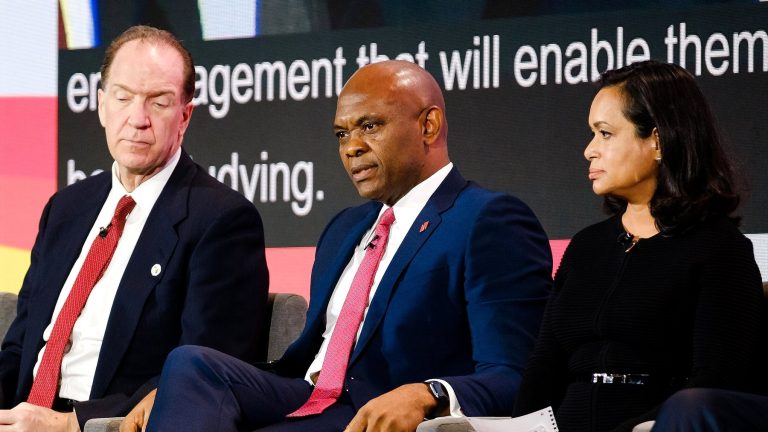
Trade and investment agencies signed a memorandum at the 17 November business forum. President Boko said bilateral trade is barely $1 million, and the visa waiver still excludes ordinary passports.

ABIDJAN, Côte d’Ivoire – The Botswana–Côte d’Ivoire Business Forum was held in Abidjan on 17 November, on the third day of President Duma Boko‘s state visit, and ended with a memorandum of understanding between the Botswana Investment and Trade Centre and Côte d’Ivoire’s investment agency, CEPICI. Speaking at the forum, Boko put two-way trade at barely $1 million, according to the Ivorian press agency AIP and APA News, and called for legal and institutional barriers to be lifted.

The forum opened at 08:00 at the Maison de l’Entreprise in Plateau, the headquarters of the Confédération générale des entreprises de Côte d’Ivoire (CGECI), as listed on an official Ivorian government agenda and by APA News. BITC had said it was organising the event with CEPICI and that it would be “headlined by President Advocate Duma Gideon Boko and Vice-President of the Republic of Côte d’Ivoire Excellency Mr. Tiémoko Meyliet Kone.” The official poster gave the theme as “Doing business in Côte d’Ivoire and Botswana.”
The Projects Magazine, reporting a meeting between BITC chief executive Keletsositse Olebile and CEPICI director-general Solange Amichia ahead of the forum, said investment talks had covered mining services, tourism, beef exports and animal pharmaceuticals. It said the Botswana delegation included the Botswana Meat Commission, the Botswana Vaccine Institute and Naledi Mining Services, and that both sides had also discussed knowledge exchange between Abidjan Financial City and Botswana’s International Financial Services Centre. Those company-level talks have not been confirmed in a published official list of deals.
BITC quoted Trade and Entrepreneurship Minister Tiroeaone Ntsima telling the forum: “We must see each other not merely as trading partners, but as strategic partners in Africa’s economic transformation.”

AIP reported that Boko told the forum intra-African trade was only about 16%, and that commercial exchanges between Gaborone and Abidjan amounted to barely $1 million. “Nous devons remédier à cela en levant les barrières juridiques et institutionnelles qui entravent le commerce entre nos pays,” he said, according to AIP — “We must remedy this by lifting the legal and institutional barriers that hinder trade between our countries.” APA News, in a later report on the MoU, also attributed the barely $1 million figure to the President. Neither government has published a statistical table behind that number, so it should be read as the figure he used at the forum, not as a newly released official data series.
He also warned against an “insularité” of knowledge, AIP said, and called on Africans to stop being “de simples spectateurs de l’histoire pour en devenir les acteurs” — “mere spectators of history and become its actors” — and to build partnerships under the African Union’s Agenda 2063 and the African Continental Free Trade Area. Those remarks sit alongside comments he made after Monday’s presidential talks. Africanews, citing AFP, quoted him telling reporters in Abidjan: “The fact that intra-African trade volumes are as low as they are today is perhaps an acknowledgement of the failure of our development models and our ideological orientations.” He said it was “a problem we must tackle, and urgently,” and that removing trade barriers in Africa “would shield us to a large extent from the exogenous shocks we suffer… when there is a war between Ukraine and Russia, a crisis in Iran or elsewhere.”

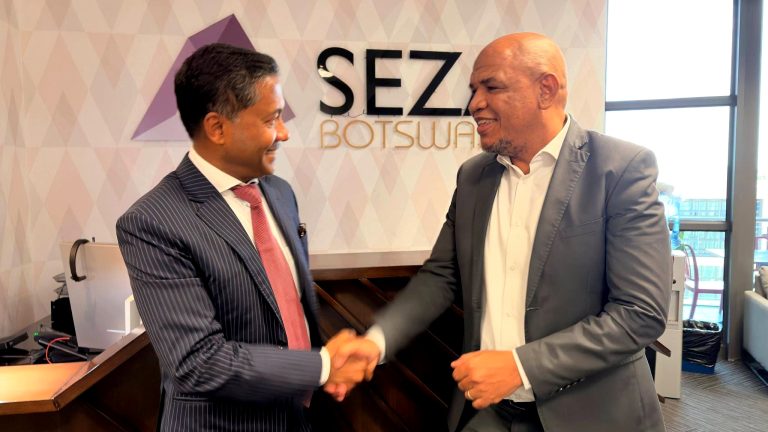
The memorandum was signed at CGECI by Amichia and Olebile, in the presence of Boko and Koné, according to BE News Côte d’Ivoire, which cited CEPICI. AIP published a photograph of the two directors presenting the document. BE News said the arrangement is meant to ease contact between investors, encourage the sharing of economic information and help the agencies identify joint projects. The text has not been published, so its duration, any financial commitments and how projects will be selected are not yet known. No company-level contracts from the forum have been announced.
The agency-level MoU sits on top of the state agreements signed on Monday, 16 November, which Boko said covered mineral exploration, skills development, animal and fisheries cooperation, and the mutual abolition of visas for holders of diplomatic, service or official, and special passports. For a full account of those accords, including company-level mining and oil memorandums reported by APA News, see the state visit report. One practical limit on day-to-day market access remains. The visa waiver does not cover ordinary passports, which most business travellers use, and the agreement text has not been published, so any start date or conditions are not yet known.

After the Monday talks, President Alassane Ouattara said, according to an official CICG communiqué, that the visit would “help to increase overall exchanges, which do not reflect the potential of our economies at all.” He called on Botswana’s private sector to invest in Côte d’Ivoire, including in mining, oil and projects in the 2026–2030 National Development Plan. APA News reported that he welcomed a Botswanan ministerial delegation and about 60 Botswana businesspeople; no official list of those companies has been published.
Mining and energy remain the other commercial track of the visit, including SODEMI’s stated interest in Botswana diamond expertise and memorandums involving Botswana Oil Limited, PETROCI and SIR. That is covered in Côte d’Ivoire seeks Botswana’s help to find its diamond source rock. Botswana is the guest of honour at the second International Exhibition of Extractive Resources and Energy (SIREXE), which opens in Abidjan on 18 November.
After the formal sessions, BITC named the firms that sat in business-to-business meetings with Ivorian counterparts, including the Botswana Meat Commission, the Botswana Vaccine Institute, BTS Tech Services and KS Energy. That account is in a separate report, Botswana Firms Take Beef, Vaccines and Tech to Ivorian Buyers in Abidjan.

People in this story: Duma Gideon Boko

Written by
Tumisang Bogwasi, Founder & CEO of Brimco. 2X Award-Winning Entrepreneur. It all started with a popsicle stand.