Bangladesh's nascent surfing team's participation in the Asian Games signals a growing interest in diverse sports within South Asia. This development holds potential for new tourism ventures and sports industry investments, particularly in coastal regions like Cox's Bazar, as the nation seeks to diversify its economic profile beyond traditional sectors.
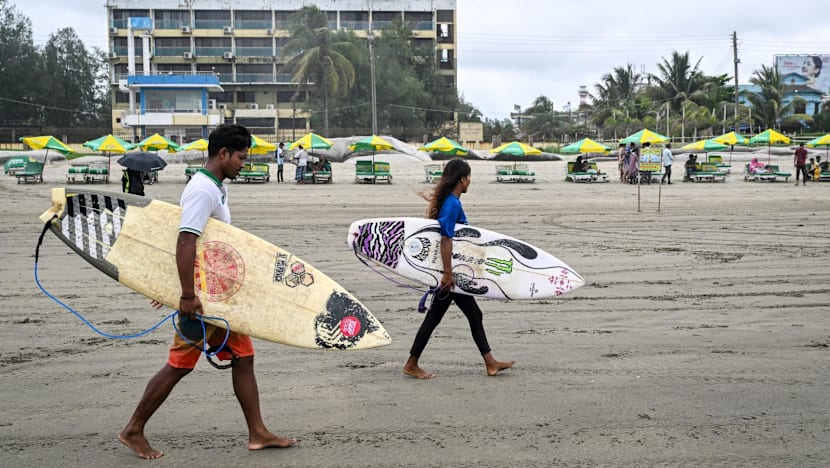
DHAKA, BANGLADESH – Bangladesh’s national surfing team recently competed at the Asian Games, underscoring the broader potential for an emerging sports economy in South Asia.
The team, primarily composed of athletes from the coastal town of Cox’s Bazar, aims to elevate surfing’s profile in a country traditionally focused on cricket and football. This participation highlights a strategic shift towards diversifying national sporting interests and leveraging niche markets for economic growth.

The team’s journey from Cox’s Bazar to the international stage at the Asian Games represents more than athletic ambition; it reflects a burgeoning market for alternative sports. Cox’s Bazar, known for its extensive sandy beach, possesses significant untapped potential as a destination for surf tourism and related recreational activities. The government and private investors could capitalize on this by developing surf schools, rental facilities, and eco-tourism initiatives.
Historically, financial allocations and public interest in Bangladesh have heavily favored cricket and football. The national cricket team, for instance, receives substantial sponsorship and media coverage, contributing significantly to the country’s sports-related commerce. However, the Asian Games platform offers an opportunity to broaden this scope, attracting new demographics and potentially international attention to sports like surfing.
Across Asia-Pacific, the sports industry continues to expand, driven by rising disposable incomes and increased media consumption. Nations like Japan and South Korea have long established robust sports economies, hosting major events and cultivating diverse sporting cultures. India, with its vast population, is also seeing significant growth in various sports, leading to increased investment in infrastructure and talent development.
Bangladesh’s engagement in events like the Asian Games contributes to this regional trend, albeit from a smaller base. Neighboring countries such as Singapore and Malaysia have actively promoted sports tourism, creating economic opportunities through events and specialized facilities. For Bangladesh, fostering sports like surfing could attract investment from regional and international tourism operators, enhancing its presence in the competitive Asian tourism market.
The development of new sports disciplines can also foster a skilled workforce in related industries, from coaching and event management to hospitality and equipment manufacturing. This diversification aligns with broader economic development goals, creating new job opportunities and promoting regional economic integration within ASEAN and beyond.

Written by
Tumisang Bogwasi, Founder & CEO of Brimco. 2X Award-Winning Entrepreneur. It all started with a popsicle stand.