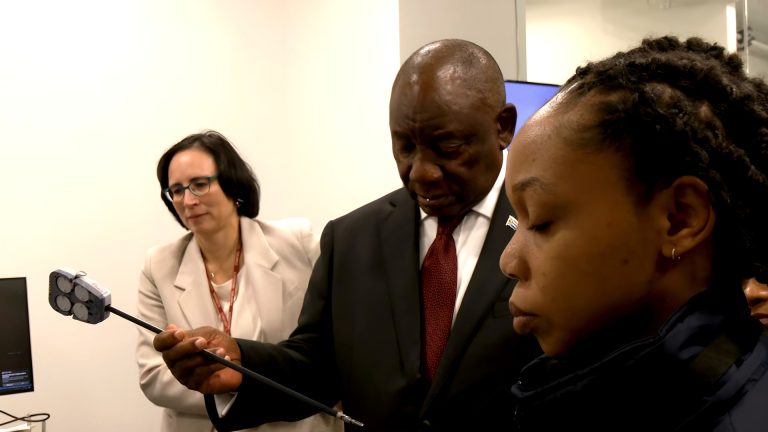
Boko told CGTN that China's zero-tariff treatment eases trade pressure on Botswana and that Chinese firms matched at a Beijing forum will travel to Botswana to close projects.
BEIJING – Botswana President Duma Boko said China’s zero-tariff treatment for African goods eases pressure on economies hit by global trade turbulence, in an interview with CGTN’s Leaders Talk recorded during his 12-17 October state visit to China and released on 18 October 2026.

He also said Chinese companies matched with Botswana firms at a Beijing investment forum would now travel to Botswana to close and start projects.
Asked how China’s zero-tariff policy could help premium Botswana exports such as beef and citrus while the global trading system faces uncertainty, Boko said: “This is the effect of opening up opportunities for these countries that have now received this benefit. It also eases the pressure on these economies that results from the uncertainty and the turbulence in the international commercial scene.”
“It also promotes trust and confidence between Africa and China. And it is a central pillar of South-South cooperation,” he said.
Boko described China as “a partner that is not out to derive undue advantage from the relationship,” adding: “that is why the People’s Republic of China has now extended a zero tariff arrangement to facilitate trade.”
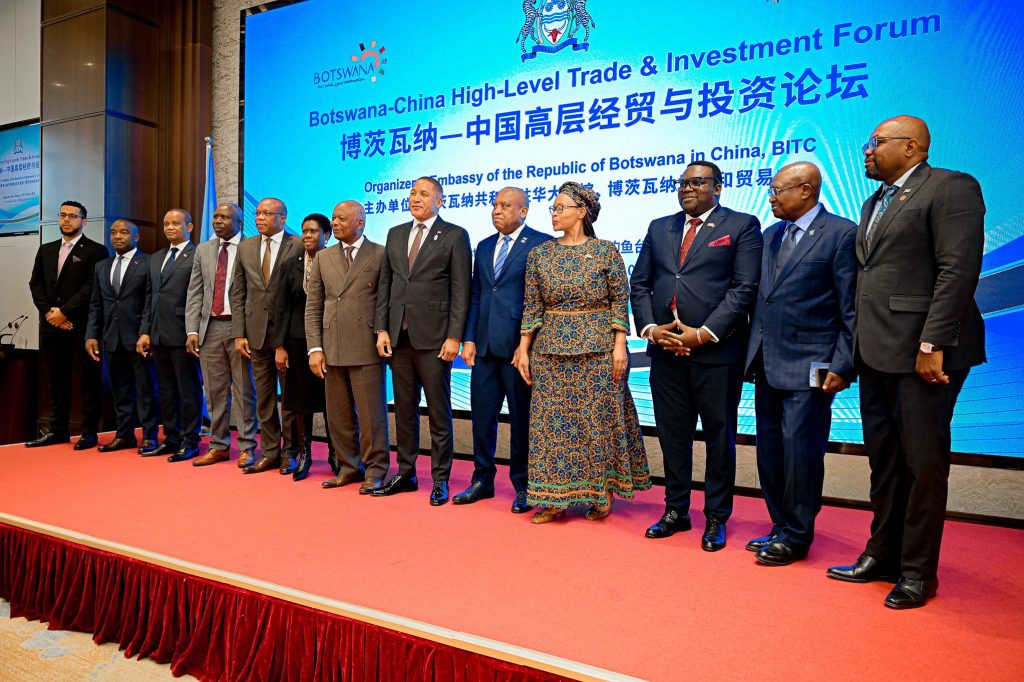
On 15 October, Boko attended the Botswana-China High-Level Trade and Investment Forum in Beijing. The Office of the President said the forum brought together 30 Botswana companies and around 300 Chinese firms.
“There also was a matchmaking, bringing together of Chinese companies with their counterparts in Botswana,” Boko told CGTN. He said projects that Chinese companies “have taken an interest in” would follow, and that the companies “will now be coming to Botswana to conclude, close on these projects and begin implementation of those projects.”
The China Council for the Promotion of International Trade (CCPIT) said its vice chairperson, Lin Honghong, met a Business Botswana delegation led by chief executive Tumi Mbaakanyi the same day. The two sides discussed business cooperation in infrastructure, agriculture and other fields, and the two organisations then signed a memorandum of understanding on cooperation.
CGTN reported that China-Botswana trade passed US$1.2 billion last year, up more than 20% year on year. Statistics Botswana figures cited by Africa China Daily showed China was Botswana’s second-largest export destination in June 2026, taking goods worth P737.6 million, or 14.9% of total exports.
Tariff-free access does not by itself open every product market. The Botswana Meat Commission told Africa China Daily in September that it had not yet exported beef to China because the veterinary protocols needed for market access were still awaiting finalisation.
Boko did not name the companies, deal values or timelines behind the forum matchmaking in the interview. Analysts quoted by the BBC have also noted that tariffs are rarely the main constraint on African exporters, pointing instead to production capacity, logistics and standards. The BBC reported that Africa’s trade deficit with China rose to about US$102 billion last year.
Botswana’s Ministry of Trade and Entrepreneurship has promoted the zero-tariff window for sectors including beef and livestock, processed food, horticulture, leather and textiles, which officials say could help widen an export base long dominated by diamonds. Most of Botswana’s Southern African Customs Union partners qualify for the same treatment. Eswatini, which recognises Taiwan, is excluded, according to the BBC.
For regional exporters, conversion from access to sales is likely to depend on sanitary protocols, logistics corridors and the follow-through on investment projects such as those Boko said were matched in Beijing.
Brimco has also examined the wider outlook for African exporters under China’s zero-tariff policy.
Video: CGTN, “Exclusive with Botswana’s President Duma Gideon Boko” (Leaders Talk, YouTube, 18 October 2026).
People in this story: Duma Gideon Boko

Written by
Tumisang Bogwasi, Founder & CEO of Brimco. 2X Award-Winning Entrepreneur. It all started with a popsicle stand.