Boko said diamonds have supplied over 80% of Botswana's revenue and the slump forces diversification, pitching Chinese technology and finance to industrialise African minerals.
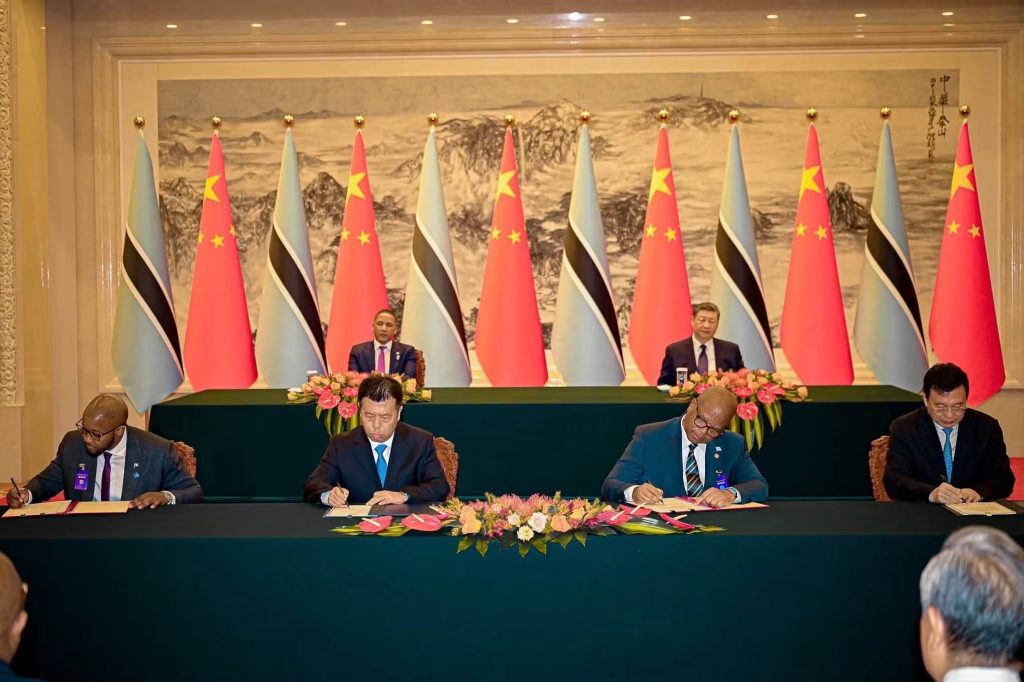
BEIJING – Botswana President Duma Boko said diamonds have accounted for “over 80%” of Botswana’s total revenue over the years and that the industry’s slump leaves the country with “no choice but to diversify,” in an interview with CGTN’s Leaders Talk released on 18 October 2026.

He set out a model in which Chinese technology and finance help African countries find, extract and industrialise their mineral resources.
“Botswana’s story is inseparable from its diamonds. And the diamonds will continue to play a part in the economy,” Boko said.
“If we talk in terms of numbers, facts and figures, the diamonds have accounted for over 80% total revenue over the years,” he said, adding that the revenue built infrastructure and funded health care and education.
“When you have 80% of your total revenue as a country reliant on a single commodity, and that commodity is facing the kinds of challenges that the diamond industry has faced, then it means your economy has been severely affected. And as a result, Botswana has no choice but to diversify.”
Published estimates of that dependence vary by measure. The IMF has put diamonds at around 80% of exports, about one-third of fiscal revenue and a quarter of GDP. Botswana’s Daily News reported diamonds contributed over 70% of exports and around a third of government revenue in 2025.
The IMF’s 2025 Article IV report said declining diamond exports had helped push international reserves down to US$3.5 billion, about five months of imports, at end-July 2025.
Boko framed the partnership with China as a division of strengths. “China has the technological capability. It has the financial resources to deploy in Africa. Africa has the natural resources, which it must first identify underground through precision exploration. Secondly, extract from the ground. Quantify. Monetize. And also to now build industries out of these,” he said.
“The technology that China is able to bring into Africa, internalize that technology in Africa, will prove immensely beneficial to these African countries and to China,” he added.
Xinhua’s Chinese-language readout of the 13 October talks said Xi offered four principles for China-Botswana and China-Africa mining cooperation (Brimco translation):
China’s government said the documents signed after the talks covered the Global Security Initiative, Belt and Road cooperation, green minerals, health and human resources.
The interview and the official readouts did not name specific mining projects, investors, financing terms or the content of the green minerals document.
The diversification push sits alongside Botswana’s move to deepen its diamond position: in his 9 November State of the Nation Address, Boko said Botswana’s stake in De Beers would double to 30% under Anglo American’s planned sale, as Brimco reported. The IMF has also pointed to rising copper exports as a partial offset to weaker diamond earnings.
Video: CGTN, “Exclusive with Botswana’s President Duma Gideon Boko” (Leaders Talk, YouTube, 18 October 2026).
People in this story: Duma Gideon Boko

Written by
Tumisang Bogwasi, Founder & CEO of Brimco. 2X Award-Winning Entrepreneur. It all started with a popsicle stand.