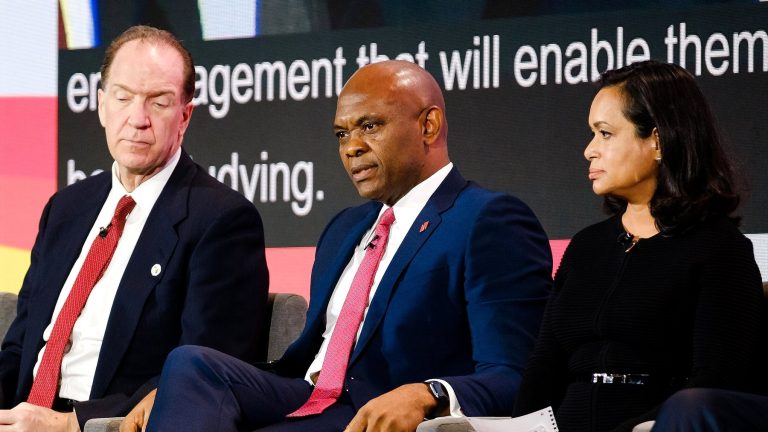
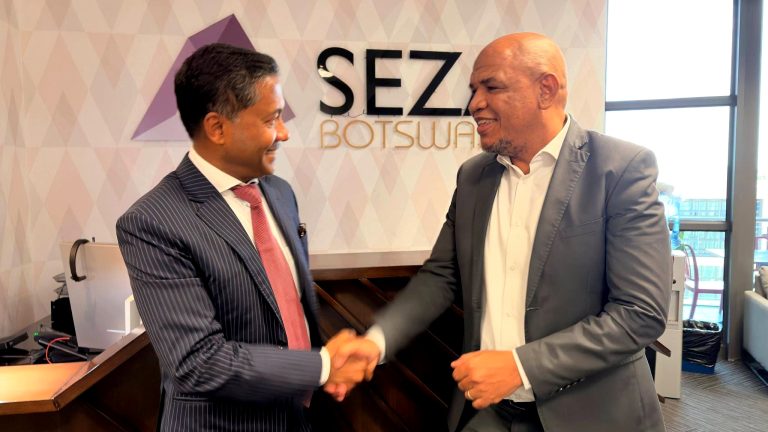
On Botswana Television, the youth minister set out the new financing products. A comparison with the Youth Development Fund, and the grant scheme that preceded it, shows higher limits and new guarantees around a long-running 18-to-35 enterprise model.

GABORONE, Botswana – Minister of Youth and Gender Affairs Lesego Chombo said Botswana intends to begin training and financing young entrepreneurs before April under the remodelled Youth Entrepreneurship Development Programme (YEDP). She set out the plan in a Botswana Television interview published on 17 November, after appearing on the programme as the government explained the successor to the Youth Development Fund (YDF).

Chombo, who launched the programme on 13 November after Cabinet approved its framework on 28 October, told the station: “We’ve only launched it last week.” Asked about an opening date, she said: “Our intention is not to rush to funding.” She added: “Are they ready? Are they ready to apply right now as we speak? The truth is that most of them are not.” On the timetable, she said the first batch would come “this financial year before April.” She added: “So we will be training and funding before April.”
The interview, titled Youth Entrepreneurship Development Programme (YEDP) and carried by BtvNews Channel BW, ran for 23 minutes. Automatic captions and a review of the audio were used to check quotations. Where her remarks were mixed with Setswana, or the English was unclear, they are paraphrased or omitted rather than reconstructed.

Chombo said the remodel followed an evaluation of the old YDF, including reports from district officers, and that the previous “one size fits all model” had been a disadvantage for young people coming from different places with different plans. Some earlier requirements, she said, have been “completely removed.”
She described a set of financing products rather than a single package. Grants for remote-area dwellers would run “from 500 pula up to 20,000 pula,” she said, and of youth cooperatives and groups: “they get up to 100,000 pula of a grant.” For young people with applied skills, she said the offer is a “50% grant 50% loan” and that “this loan is interest free.” A wider start-up loan, which she linked to affirmative action and said was “open to everyone,” “gives you up to 250,000 pula of a loan.”
On expansion finance, she said government wants established youth firms to raise money from the private sector, and that the state would “share the risk.” She also described a “unicorn package” for businesses that should not be held to the usual funding limit, saying of such a venture that it “is living 10 years in the future,” and a separate package for industries that can substitute for imports after government “looked at the import bill.”
Training comes first. Chombo said applicants would go through a six-week entrepreneurship course, with the first three weeks followed by three weeks “making you startup ready.” “By the time you apply you can even get this training and go and start your own business,” she said. She said the new fund “is going to be digital” and that this “will definitely be faster,” but added: “At this point I cannot give you that turnaround time.”
Those product details match the framework the ministry published when it replaced the YDF with six financing products, including start-up loans of P50,000 to P250,000 for individuals and up to P1.25 million for groups, and government guarantees of up to 70% on bank loans of P250,000 to P2 million.
One reason she gave for the change was repayment culture under the old fund. “One of the lapses with the previous YDF was that everyone was just looking for the money,” she said. “We don’t want to create dependency.” Aftercare would include “post funding labs,” an idea she said was borrowed from the economic transformation programme, and said district labs would be run in partnership with Business Botswana.
Near the end of the interview she turned to the African Youth Charter, saying Botswana had acceded to it “earlier this year or mid year.” She said commitments should be honoured “not just in writing, not just in saying, but in action.” In a 12 November Facebook post, Chombo said the accession took place in June 2026 and that the charter’s employment and skills commitments are written into the National Youth Policy 2026-2036, which Parliament adopted in April. The charter is an African Union instrument. In August, in remarks reported by Daily News, she separately said UNICEF had been “a consistent partner, working closely with her ministry on the reform of policies such as the Youth Development Fund.”
The YEDP is the latest version of a state youth-enterprise scheme Botswana has run, under different names and rules, since the Out of School Youth Programme (OSYP) began in the 2000/01 financial year, during the presidency of Festus Mogae. The Youth Development Fund replaced that programme in 2009/10, after Ian Khama took office. In February 2009, then finance minister Baledzi Gaolathe told Parliament the out-of-school youth grant programme would move to the Citizen Entrepreneurial Development Agency (CEDA), with a ceiling of P100,000 split as a 50% grant and a 50% interest-free loan, and a 5% charge in the event of default. The fund that followed was administered by the youth ministry, which has remained the policy owner through later transfers, including a period in which the Ministry of Entrepreneurship was assigned the programme while the youth ministry continued to implement it.
That 50% grant and 50% interest-free loan, with a 5% monthly penalty on arrears, was still the standard offer in the ministry’s June 2017 and May 2024 YDF guidelines. Individual start-ups were capped at P100,000. Youth industries and cooperatives were capped at P450,000. Applicants had to be Botswana citizens aged 18 to 35, and out of school, unemployed or underemployed (earning P2,500 a month or less). Those rules, and the fund’s stated aims of job creation, rural enterprise and support for marginalised youth, changed little across the Khama and Mokgweetsi Masisi years, even as the annual allocation moved around a long-standing figure of about P120 million, later cut to P104 million in 2022.
Masisi did order a review. In his 5 November 2018 State of the Nation Address, he said government would focus more of the fund on “youth cooperatives and consortia” and would make “training in first level project management” a “pre-condition for being funded,” with exemptions in deserving cases. The ministry signed a mentorship memorandum with the Local Enterprise Authority (LEA) in December 2018. The 2017 and 2024 guidelines already required a competency test for applicants without formal training, but they did not replace the 50/50, P100,000 model with a new set of products.
What has stayed the same. The programme is still a government scheme for citizen youth aged 18 to 35, run from the youth ministry, and still aimed at start-ups, groups and cooperatives. One of the new products, Applied Skills Start-Ups, is still a 50% grant and 50% interest-free loan. Training, mentorship and aftercare are again presented as the cure for business failure and poor repayment, as they were in 2016, 2018 and 2019. The published YEDP framework does not yet give a total budget or an application opening date.
What has changed. The single 50/50 package has been replaced by six products, with full grants for remote-area dwellers, much higher loan ceilings for some start-ups and groups, a “unicorn” window above the usual caps, and partial credit guarantees that bring banks and other lenders into the scheme. Training is specified as up to six weeks and is supposed to be accredited by the Botswana Qualifications Authority, with certification required before funding. The framework also creates an independent board, a credit and grants committee and a professional fund manager, and it provides for a digital information system and post-award support labs. Those are genuine design changes. They have not yet been tested in a funding round.

The remodel is being sold as a response to weaknesses the framework itself lists as “weak repayment performance, limited post-financing support, fragmented implementation and oversight structures.” The public record on those points is long.
In February 2016, then youth minister Thapelo Olopeng told Parliament that a “high failure rate” of funded projects and “compliance to repayment of loans, which is currently a huge challenge,” were already problems for the YDF. In November 2018, Sunday Standard reported that the ministry’s permanent secretary, Kago Ramokate, had told the Public Accounts Committee the fund had failed to collect around P400 million, that annual disbursements were about P114 million, and that collections were P2.8 million against a P6 million target, with some records missing.
In December 2023, then minister Tumiso Rakgare told Parliament that 2,768 youth-owned businesses were funded through the YDF from 2019/20 to 2022/23, and that 214 were “successfully servicing their loans.” Daily News, reporting the same answer, said 2,534 of the funded businesses were still operational. Rakgare said high rentals, limited operating space, a weak market, a lack of mentorship and, in some cases, a lack of commitment had held businesses back. He also said beneficiaries had been owing P407 million, a figure in line with the earlier uncollected-loan estimate, and that the fund had assisted at least 1,140 projects a year since 2009 on an annual budget of P120 million.
The new framework does not say how the old loan book will be recovered, or what the remodel will cost. Government guarantees of up to 70% on bank loans, and much larger import-substitution tickets, would transfer part of the risk to the state. That matters as public finances tighten. In the 2027/28 Budget Strategy Paper issued with this week’s Budget Pitso, the Ministry of Finance still works from a projected deficit of P26.35 billion and debt rising towards 45% of GDP by March 2027. Vice President and Minister of Finance Ndaba Gaolathe has said government should act as a catalyst rather than the main financier of investment.
For young applicants, the immediate change is the queue: training first, then an application, with Chombo saying most people are not ready to apply now and that the first batch is intended before April. Those with vocational skills may still receive a familiar 50/50 package, but at a lower ceiling than the new general start-up loans. Remote-area applicants are offered small full grants. The higher ceilings and the unicorn window matter only if the programme is funded at a scale that can meet them.
For banks and other lenders, the new guarantee window is the main opening. The framework says lenders will appraise applications and set terms, with government covering up to 70% of qualifying expansion loans. That is a different role from administering a ministry grant. It also leaves lenders with residual risk, and leaves the Ministry of Finance with a contingent liability that has not been quantified in public.
For suppliers, contractors and business-support firms, a revival of youth-enterprise funding would restore a known customer base, especially if post-funding labs and LEA linkages work as described. The import-substitution package, if it is capitalised, would be a larger industrial bet than the old P100,000 start-up grant.
None of that can be measured until the ministry publishes a budget, a start date and the rules that will sit underneath the framework. Chombo’s television appearance confirmed the political timetable, and the products, more clearly than it settled the cost.
People in this story: Ndaba Gaolathe

Written by
Tumisang Bogwasi, Founder & CEO of Brimco. 2X Award-Winning Entrepreneur. It all started with a popsicle stand.