A ProPublica report, as detailed by Ars Technica, indicates that investors from China, some linked to military contractors, acquired stakes in SpaceX before its hypothetical IPO. These investments, ranging from $800,000 USD to $40 million USD, occurred between 2018 and 2021 through a U.S. middleman firm. The report highlights potential national security concerns, especially as SpaceX reportedly barred Chinese investors from its public offering due to compliance risks.
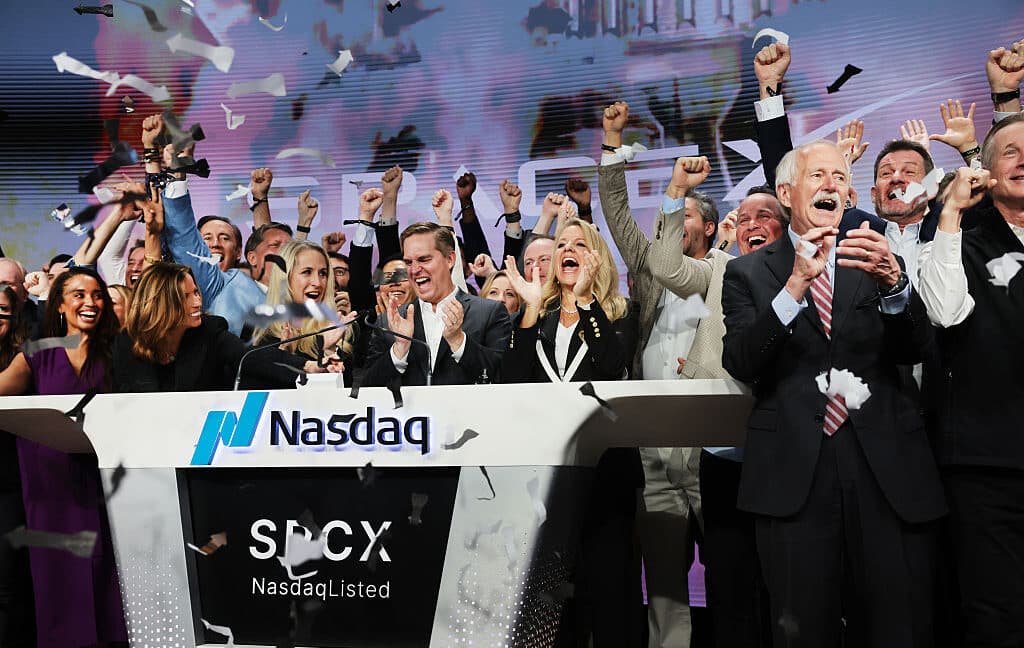
NEW YORK, UNITED STATES – A confidential investor list, obtained by ProPublica and detailed by Ars Technica, indicates that investors in China, including some with connections to Chinese military contractors, acquired stakes in SpaceX before the company’s initial public offering (IPO), which the source article places in the hypothetical ‘last week’.
This development highlights the complex regulatory landscape surrounding foreign investment in sensitive U.S. aerospace and defense industries. The company, a key contractor for the U.S. government in satellite and rocket technology, notably excluded investors from China and Hong Kong from participating in its IPO due to what were “regulatory and compliance risks.”

The newly disclosed records, part of a corporate dispute in Delaware, detail at least a dozen investors with addresses in mainland China, Hong Kong, or Russia. These investments, made through the U.S.-based firm Tomales Bay Capital, collectively ranged from $800,000 USD to $40 million USD between 2018 and 2021, according to the ProPublica list. This occurred while SpaceX was developing critical U.S. government contracts, including the manufacture of spy satellites for the Pentagon.
One notable investment involved an entity owned by David Su, co-founder of the prominent Beijing venture capital firm MPCi. Su’s entity invested $15 million USD into a SpaceX fund in 2020. MPCi has also been a significant backer of SpaceX’s Chinese competitors, and two satellite companies it invested in, including Spacety, were previously sanctioned by the U.S. government. These sanctions were for allegedly assisting the Wagner Group, a Russian mercenary organization, and later for reportedly aiding Iran in attacks against U.S. military forces.
The U.S. government maintains a strategy of scrutinizing foreign investments, particularly from countries like China, for potential espionage or access to cutting-edge technology. While no specific ban exists on Chinese investment in U.S. military contractors, such activities are subject to heavy regulation. Sarah Bauerle Danzman, an Indiana University professor with State Department experience in foreign investment scrutiny, stated that the key concern is whether China-based investors obtained access to non-public information about SpaceX’s technology or strategies.
“If an investor has conflicts of interests with other companies in China, if they could feed that information to competitors, it could be a national security concern,” Danzman explained. MPCi released a statement asserting that Su “has not received any nonpublic information of SpaceX.”
The firm also clarified that Su is a Singapore citizen residing in Singapore and is responsible for MPCi’s U.S. dollar funds. However, a 2024 profile indicates Su has spent nearly all of the past two decades in China.
Ryan Stonerock, a lawyer for Tomales Bay Capital, stated that the firm “has not provided any non-public, sensitive information regarding SpaceX to investors.” Stonerock characterized the investors as passive limited partners who received only fund financials, including quarterly valuations. He also contended that the “vast majority, if not all, of the investors included on the unsealed Tomales Bay investor list are not citizens of any foreign adversary, including Russia or China.”
SpaceX’s hypothetical IPO, described in the source as the largest ever, reportedly made Elon Musk the world’s first trillionaire. This event unfolded despite ongoing geopolitical tensions and increased scrutiny of foreign investments in critical U.S. technology sectors. SpaceX did not respond to questions regarding the foreign investments or its IPO restrictions.
The revelation of pre-IPO Chinese investment in SpaceX carries significant implications for the U.S. aerospace sector and its national security apparatus. Such disclosures could intensify calls for tighter oversight of indirect foreign capital flows into defense-critical industries, potentially leading to more stringent review processes by the Committee on Foreign Investment in the United States (CFIUS).
The U.S. government’s concerns about technology transfer and industrial espionage remain a primary driver for these regulatory pressures, particularly given the dual-use nature of many space technologies.
This situation also underscores the delicate balance U.S. companies, especially those with extensive government contracts, must strike between global capital access and national security imperatives. Future IPOs or private placements by companies in sensitive sectors may face enhanced scrutiny regarding their investor base. The market could see a shift towards more rigorous due diligence requirements for investment intermediaries to ensure compliance with evolving national security guidelines.

Written by
Tumisang Bogwasi, Founder & CEO of Brimco. 2X Award-Winning Entrepreneur. It all started with a popsicle stand.