Darden Restaurants, the parent company of Olive Garden and LongHorn Steakhouse, reported fourth-quarter earnings that surpassed analyst expectations, though growth at its flagship Olive Garden brand showed signs of deceleration. The company's performance highlights a mixed consumer spending environment impacting the casual dining sector.
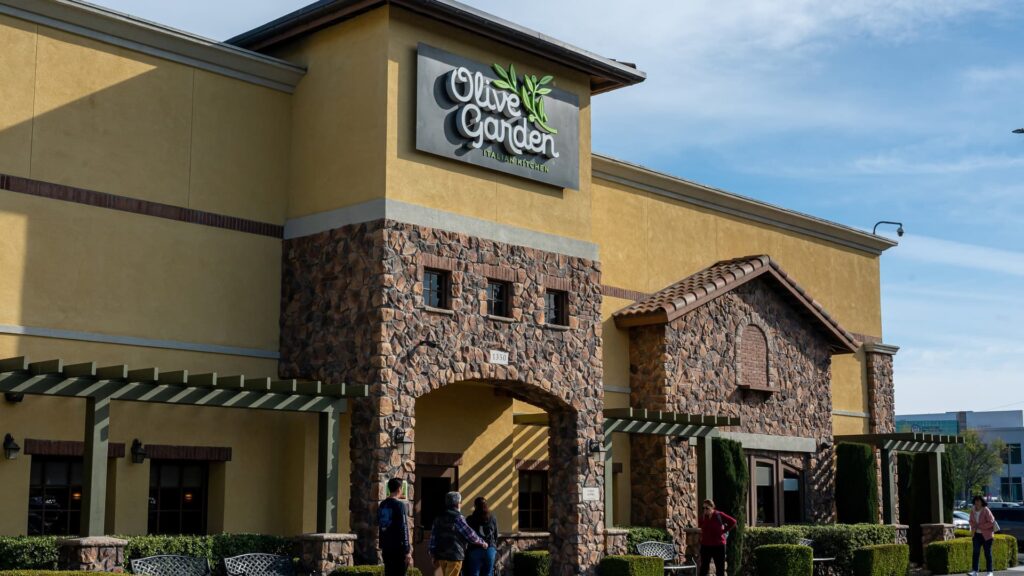
ORLANDO, Fla. – Darden Restaurants Inc. (DRI) on Tuesday announced fiscal fourth-quarter financial results that exceeded Wall Street’s earnings projections, even as its flagship Olive Garden chain experienced a slowdown in same-store sales growth. The Orlando-based company, a dominant force in the casual dining industry, is navigating a complex consumer landscape marked by persistent inflation and shifting spending habits.
For the quarter ended May 26, Darden reported net income of $274.9 million, or $2.31 per diluted share, a decrease from $286.8 million, or $2.38 per diluted share, in the prior-year period. Adjusted earnings per share came in at $2.31, beating the consensus estimate of $2.21 from analysts surveyed by LSEG.
Total sales for the quarter rose 5.5% to $2.2 billion, meeting expectations. However, the performance of Olive Garden, which accounts for the largest portion of Darden’s revenue, indicated a cooling trend. Same-restaurant sales at Olive Garden increased by a modest 1.7%, a notable deceleration compared to previous periods and below the company’s historical growth rates.

This slowdown at Olive Garden contrasts with the performance of other brands within Darden’s portfolio. LongHorn Steakhouse, for instance, saw same-restaurant sales climb 3.7%, indicating resilience in its customer base. Other brands, including Cheddar’s Scratch Kitchen and Yard House, also posted positive same-store sales growth, underscoring a divergence in brand performance within the company.
Darden Chief Executive Officer Rick Cardenas attributed the overall earnings beat to the company’s operational execution and disciplined cost management. “Our teams delivered a strong finish to the fiscal year, exceeding our expectations for the quarter through relentless focus on operational excellence and delivering exceptional guest experiences,” Cardenas stated in a press release.
Despite the headwinds at Olive Garden, Darden reaffirmed its confidence in its long-term growth strategy, which includes new restaurant openings and menu innovation. The company provided an outlook for fiscal year 2025, projecting total sales growth between 4% and 6% and earnings per share in the range of $9.50 to $9.80. This forecast suggests management anticipates continued but moderate growth for the coming fiscal year.
The company’s ability to manage labor costs and supply chain disruptions remains critical as it seeks to maintain profitability in an environment of elevated input prices. Darden’s scale provides some leverage in negotiating supplier contracts, but the broader economic pressures on consumer discretionary spending continue to pose a challenge.
The mixed results from Darden reflect broader trends impacting the U.S. restaurant industry. Consumers are showing increased price sensitivity, leading some to trade down to less expensive dining options or reduce their frequency of eating out. While Darden’s brands are generally positioned in the value-conscious casual dining segment, the company is not immune to these macro-economic shifts.
Analysts are closely watching Darden’s ability to attract and retain customers by balancing menu prices with perceived value. The company’s investment in digital ordering and off-premise dining options is also a key factor in its strategy to adapt to evolving consumer preferences and capture market share. The performance of Olive Garden, in particular, will be a closely watched indicator of broader consumer sentiment in the casual dining space.
The performance of a major U.S. consumer discretionary company like Darden Restaurants provides a snapshot of American household spending patterns. A slowdown in same-store sales at Olive Garden, a household name, could signal a broader consumer pullback, impacting retail sales and potentially influencing Federal Reserve monetary policy decisions if it becomes a widespread trend. This could lead to reduced demand for goods and services, potentially influencing inflation dynamics and corporate earnings across various sectors.
From a capital markets perspective, Darden’s results are scrutinized by investors for insights into the health of the restaurant industry and the broader economy. Any significant deceleration in sales could impact investor sentiment towards other publicly traded restaurant chains and related consumer stocks. Furthermore, the company’s ability to manage costs and maintain profit margins in the face of inflationary pressures is a key concern for the U.S. Treasury and economic policymakers seeking to ensure stable economic growth.
Wall Street analysts and economists will parse Darden’s commentary for clues about future consumer behavior. A sustained weakening in casual dining could prompt adjustments in economic forecasts and potentially influence the Federal Reserve’s approach to interest rates.
The Federal Reserve closely monitors consumer spending as a key indicator of economic vitality and inflationary pressures. A broad-based slowdown in consumer spending, as potentially indicated by Darden’s results, could lead the Fed to reconsider its stance on monetary tightening.

Written by
Tumisang Bogwasi, Founder & CEO of Brimco. 2X Award-Winning Entrepreneur. It all started with a popsicle stand.