


The Vice President and Finance Minister told the inaugural Botswana Investment Forum that pension funds, banks and development financiers must fund commercially viable projects as diamond revenue weakens.
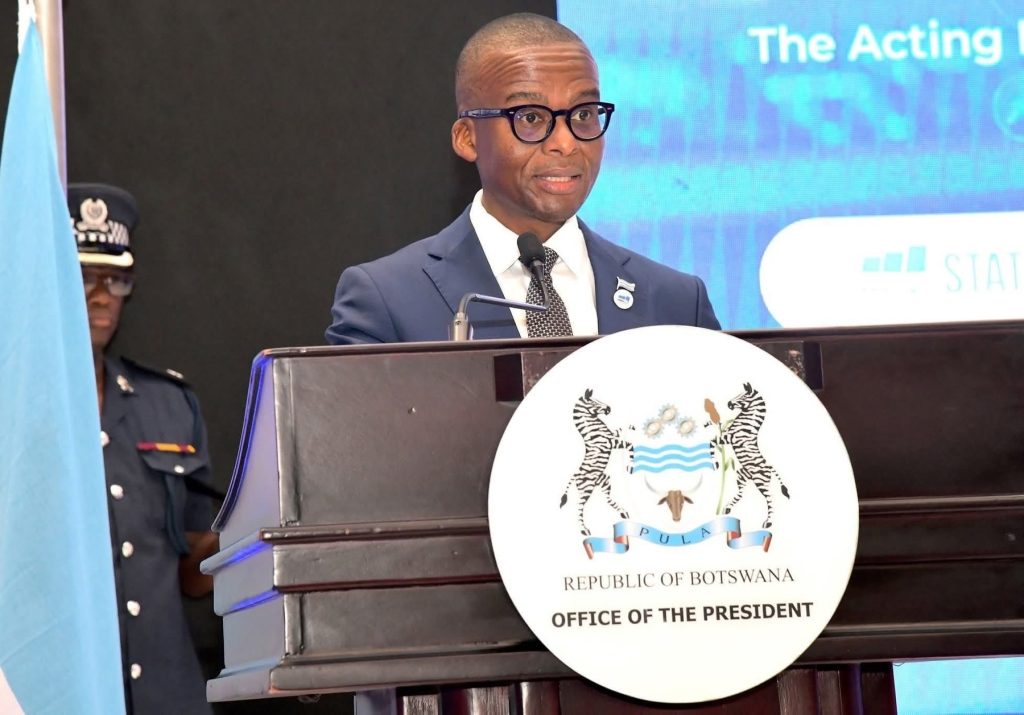
GABORONE – Vice President and Minister of Finance Ndaba Gaolathe says Botswana can no longer rely on the state to pay for its development, and wants pension funds, banks, insurers and development financiers to put more money into commercially viable projects.

Speaking at the inaugural Botswana Investment Forum in Gaborone on 5 November, Gaolathe said public resources should be used to unlock additional capital rather than fund most projects directly, The Business Weekly & Review reported on 12 November. He made the same case in an opinion piece published under his name by News&All Botswana on 9 November.
“Botswana cannot finance tomorrow’s economy using yesterday’s model,” he wrote. “Diamond revenues have weakened, fiscal buffers eroded and public debt risen, while demands on Government grow.”
A central part of the plan is to make Botswana’s development finance institutions work together: the Botswana Development Corporation (BDC), the Citizen Entrepreneurial Development Agency (CEDA), the National Development Bank (NDB) and the Botswana Digital & Innovation Hub (BDIH).
“A young Motswana with a viable business idea should not have to navigate the Government financing system to find help,” Gaolathe wrote. “We do not necessarily need more institutions. We need those we have to work better together.”
Government is also considering a fund of funds, credit guarantees, blended finance and public-private partnerships to widen the pool of financiers, according to The Business Weekly & Review. Gaolathe paired that with a warning on risk. “Financial innovation must be matched by fiscal prudence,” he wrote.
“We must not mortgage the future through poorly structured financing.”
The financing push is meant to support the Botswana Economic Transformation Programme (BETP), which prioritises agriculture, manufacturing, tourism, energy, mining, infrastructure and financial services. Gaolathe cautioned that naming projects is not enough. “A list of projects is not an investment pipeline,” he wrote, adding that projects must be commercially credible, technically prepared and backed by infrastructure, approvals and market access.
He said success should be measured by investment secured, enterprises established, exports generated and sustainable jobs created.
On pension money, he drew a clear line. Institutional investors should take a more active part while keeping their independence and fiduciary duties, he wrote: “Investment decisions must rest on commercial merit, never political pressure. Government must create opportunities that attract investment on their merits, not compel participation.”
Minister of Trade and Entrepreneurship Tiroeaone Ntsima told the forum that the investment drive must also produce local businesses able to take part in major projects and compete beyond Botswana’s borders, The Business Weekly & Review reported. He pointed to agricultural processing, packaging, cold storage, transport, healthcare and manufacturing as areas where investment could create demand for local suppliers.
Ntsima said firms needed to improve productivity, product quality, management and reliability, and that the African Continental Free Trade Area (AfCFTA) would only benefit businesses able to meet market standards. He urged investors to bring technology, skills and market access as well as capital.
Investors at the forum said the constraint is not only money. Debswana Pension Fund chief executive Thato Norman told a panel that Botswana struggles to find enough investable opportunities, partly because of its small domestic market, The Projects Botswana reported.
He argued for export-led, regional business models and reminded delegates that pension assets belong to members who depend on them for retirement and healthcare.
Another panel at the forum warned that weak governance can halve what investors will pay for a business. President Duma Boko, speaking at the Botswana Business Awards the same evening, offered investors a direct line to his office when bureaucracy stalls.
The pressure behind the shift is visible in the government’s own numbers. A BETP mid-year review reported this week says diamonds now supply 24% of government revenue, down from 35% in 2007, and that government deposits fell 63% between 2007 and 2023.
Mobilising pension savings for domestic investment is not a new idea in Botswana. Gaolathe raised it in 2025, and its success will depend on whether the projects on offer earn their returns on merit, as he says they must.
The government has not yet published the size, structure or timetable of the proposed fund of funds, or which institutions would anchor it.

Written by
Tumisang Bogwasi, Founder & CEO of Brimco. 2X Award-Winning Entrepreneur. It all started with a popsicle stand.


