The National Aeronautics and Space Administration (NASA) has extended an invitation to media representatives for the upcoming launch of the Nancy Grace Roman Space Telescope. This next-generation observatory is poised to significantly advance research into dark energy, dark matter, and the discovery of exoplanets, underscoring continued investment in deep space exploration.
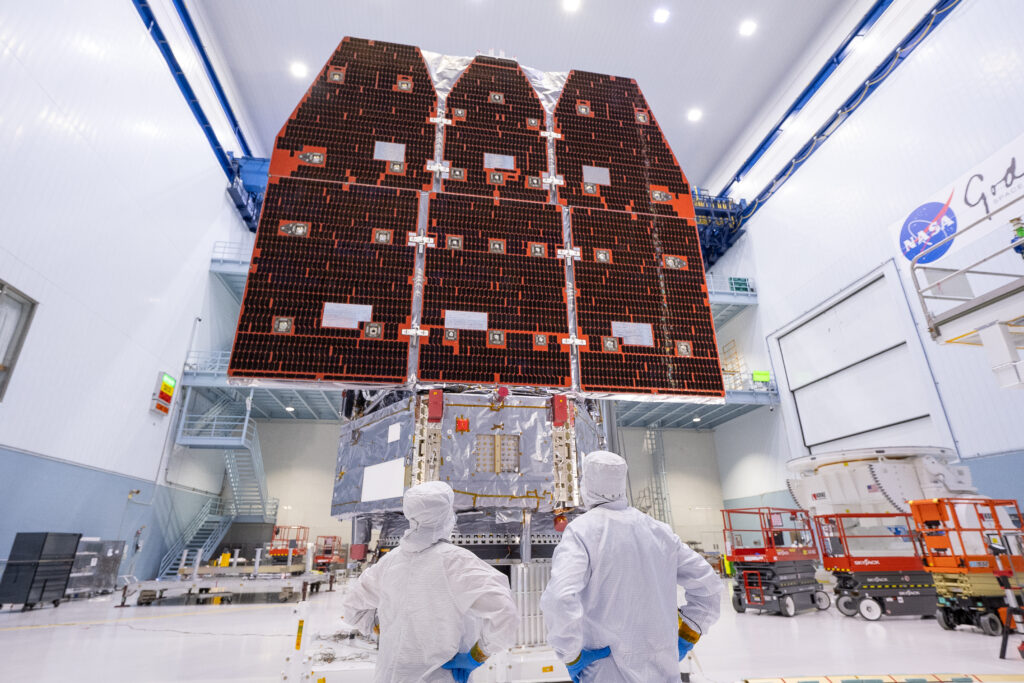
WASHINGTON, United States – The National Aeronautics and Space Administration (NASA) has issued an invitation to media organizations for the launch of its Nancy Grace Roman Space Telescope, marking a pivotal step in future astrophysics missions. The invitation signals the agency’s readiness to unveil the advanced observatory, which is designed to provide an expansive view of the universe, exceeding the field of vision of predecessors like the Hubble Space Telescope NASA News Release.

The Roman Space Telescope, formerly known as the Wide Field Infrared Survey Telescope (WFIRST), represents NASA’s commitment to unraveling fundamental cosmic mysteries. Its primary objectives include exploring the expansion of the universe by studying dark energy and dark matter, as well as detecting and characterizing exoplanets through its wide-field instrument and coronagraph.
The telescope’s wide field of view, approximately 100 times larger than Hubble’s, will enable rapid surveys of vast cosmic regions. This capability is expected to generate unprecedented data volumes, providing astronomers with new insights into galactic evolution and the distribution of matter in the universe. The Coronagraph Instrument onboard will demonstrate cutting-edge technology for directly imaging exoplanets by blocking out the glare of their host stars.
This upcoming launch underscores the United States’ continued leadership in space science and technology. Significant government funding, channeled through NASA, supports the development and deployment of complex instruments like the Roman Space Telescope, directly impacting the domestic aerospace and technology sectors.
Investment in such missions stimulates innovation, fosters job creation within high-tech manufacturing and research, and maintains a competitive edge in global scientific exploration. The successful deployment and operation of the Roman Telescope are expected to generate substantial scientific returns, reinforcing America’s position at the forefront of astrophysics research for decades.
The Roman mission adds to a series of high-profile NASA initiatives, including the Psyche mission’s Mars flyby data delivery and the Webb Telescope’s discovery of hidden planets NASA Website. These ongoing projects collectively demonstrate the breadth and depth of the agency’s scientific portfolio, continually pushing the boundaries of human understanding of space.

Written by
Tumisang Bogwasi, Founder & CEO of Brimco. 2X Award-Winning Entrepreneur. It all started with a popsicle stand.