Homeland Security Secretary Markwayne Mullin and Director of National Intelligence Jay Clayton said failures at Microsoft, the FAA, JPMorgan Chase, United Airlines, Apple and the NSA were not a coordinated attack. Each operator has given its own technical explanation.

WASHINGTON, United States – US Homeland Security Secretary Markwayne Mullin and Director of National Intelligence Jay Clayton said a week of high-profile outages at Microsoft, the US Federal Aviation Administration, JPMorgan Chase, United Airlines, Apple and the National Security Agency was not a coordinated cyberattack. Each operator has given its own technical explanation. The clustering is still a continuity problem for businesses that depend on more than one of those systems.

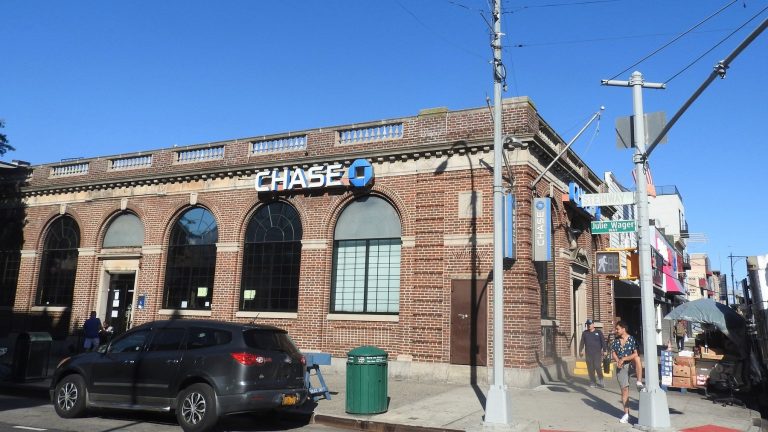
The failures arrived in six days. Microsoft said a July software bug, a Teams failover and reduced gateway capacity caused a nearly 24-hour Microsoft 365 outage on 12 and 13 November. On 13 November the FAA issued a nationwide ground stop of just over four hours after instability on its telecommunications network; cancellations and delays continued through the weekend. On 16 November, JPMorgan Chase said a software bug delayed some customer transactions, with knock-on delays at other banks, and United Airlines reported a system outage that delayed some departing flights. On 17 November, Apple blamed an internal update for outages across iCloud, the App Store and other services, and the NSA reported temporary degradation on an internal network during scheduled maintenance.

Mullin’s title is United States Department of Homeland Security Secretary, as given in a 13 November DHS release. On the evening of 16 November he told Fox News host Sean Hannity that he had asked the Cybersecurity and Infrastructure Security Agency what was happening.
“They said, Sir, we’re not seeing any traffic that would make us think that this is a cyber attack. They’re all individually unrelated,” Mullin said.
He then relayed a theory from an unnamed contact in the technology industry, who he said was not Elon Musk. The contact, he said, believed “SI” — the term the administration uses for artificial intelligence, or “super intelligence” — could be overwhelming systems that were not designed to run as fast as the new tools. “I can tell you with 98 percent certainty, we’re not seeing the cyber attack,” Mullin said. “No one’s out there taking claims for it. We’re not seeing the traffic. We’re not seeing the footprints going in. We’re not seeing the footprints going out.”
That is a stronger formulation than the one Mullin gave at a White House briefing on 13 November, while the FAA ground stop was still being unwound. Asked then whether he could say with 100% certainty that the aviation failure was not a cyberattack or a “rogue AI,” he said: “There’s nothing completely certain right now.” He later added: “We have seen zero evidence that this was a cyber attack or SI attack.” In the same briefing, Transportation Secretary Sean Duffy said investigators did not want to rule out “nefarious activity,” but that the fix pointed to “a legacy network problem.”
By 17 November, Director of National Intelligence Jay Clayton, speaking on CNBC’s Closing Bell, was more direct. “This is not a cyber attack, and this is not a coordinated effort by a nation state,” he said.
None of the operators has blamed AI. The FAA pointed to a flood of data on a legacy telecommunications network. Microsoft said the Microsoft 365 failure was “not related to cyber or AI agents.” JPMorgan Chase and United each said they had found no evidence of a cyberattack. Apple said an internal update caused its outages. The NSA said some internal systems suffered “temporary degradation during scheduled routine maintenance.”
Even if the causes are separate, a business can lose more than one channel in a single week. A company that runs mail and meetings on Microsoft 365, manages devices through Apple, pays US counterparties through a bank that clears with Chase, and moves staff or cargo on US airlines was exposed to all four of those failures between 12 and 17 November.
The immediate checks are practical. Incident response that depends on Outlook or Teams will stall if those services are down, so a second messaging channel and a status-page watch that does not sit on the same tenant are basic precautions. Payments teams should assume a major correspondent bank can delay transactions for hours and should know which of their flows touch Chase or Zelle. Travel and logistics desks need a way to rebook when a US ground stop or an airline system failure strands passengers over a weekend.
For readers in Botswana and the rest of southern Africa, the direct local footprint of the US banking and aviation failures is not yet documented in official figures. The Microsoft 365 outage was global and ran through a business day into a second. Apple device sign-in and volume-purchasing tools failed during the US working day, which is evening into night in Gaborone. US-bound itineraries and any payment that has a US correspondent as a party can still be delayed when those systems fail, even if a local bank or airline is not itself down. The working assumption should be that a cloud, payments or airline vendor can go down for hours, and that the fallback cannot sit on the same service.

Written by
Tumisang Bogwasi, Founder & CEO of Brimco. 2X Award-Winning Entrepreneur. It all started with a popsicle stand.