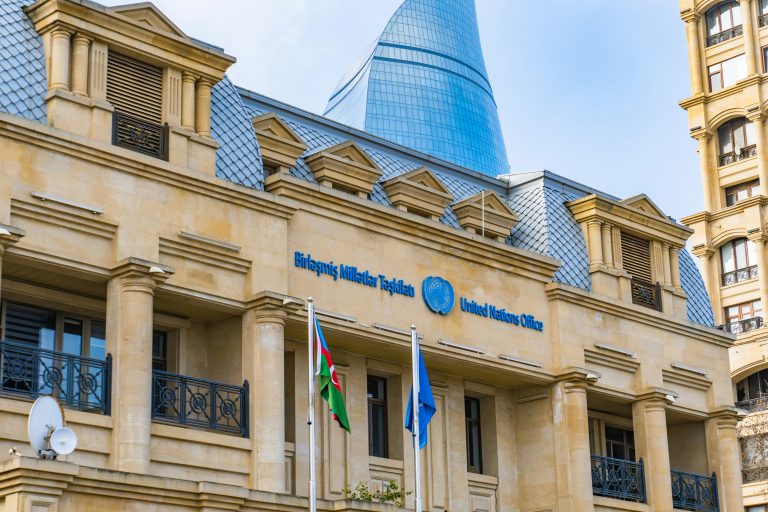
The OPEC Development Fund secured a $3 billion co-financing facility with the Asian Development Bank as part of a $20 billion five-year deployment strategy across 130 member and partner nations, driving capital into emerging-market energy and digital infrastructure.

Vienna, Austria – The OPEC Development Fund broadened its operational footprint to 130 countries and signed a $3 billion co-financing framework with the Asian Development Bank to accelerate cross-border energy and technology investments. The transaction anchors a broader capital deployment strategy allocating $20 billion across global public and private sectors over the next five years.

The 15 May 2024 partnership formalizes parallel lending channels between the two institutions, detailed in the Reuters financing report. Capital allocations prioritize digital infrastructure, grid modernization, and climate adaptation projects across Asia. The facility structure combines concessional grants with low-interest credit tranches calibrated against each sovereign borrower’s debt-service headroom.
Established in 2015 with administrative autonomy from the OPEC Secretariat, the fund now provides bilateral facilities across 130 sovereign counterparties. Its institutional mandate emphasizes credit enhancement for middle- and low-income borrowers facing steep commercial borrowing spreads. The broadened operational mandate lowers risk premia by crowding in co-financiers alongside balance-sheet commitments.
The institution’s 2023 strategic framework earmarks $5 billion of the overall five-year envelope strictly for renewable energy assets. Initial deployments support utility-scale solar arrays along Egypt’s Suez Canal corridor and commercial wind projects in Jordan. An additional official video briefing outlines programmatic support for technical capacity and cross-border digital networks.
Project tranches combine technical assistance grants with commercial debt underwriting to mitigate early-stage execution bottlenecks. By taking subordinate or mezzanine positions in sovereign utility expansions, the fund cushions commercial lenders against off-taker payment defaults. This financial engineering structure aims to accelerate private capital mobilization into high-risk utility concessions.
The global portfolio expansion creates secondary funding avenues for sovereign debt managers across sub-Saharan Africa. Concessional credit facilities ease balance-sheet pressure for state utilities seeking to decarbonize generation without tapping punitive international bond markets. Co-financing mechanisms directly complement the African Development Bank’s climate resilience pipeline under the African Union Agenda 2063.
Future deployment rounds target trans-regional infrastructure syndications spanning the Sahel, geothermal projects in East Africa, and tech hubs in West Africa. Access to dual-lender facilities reduces foreign-exchange exposure for central banks managing balance-of-payments volatility. These blended finance vehicles provide predictable fiscal buffers for frontier sovereigns facing tighter global monetary conditions.

Written by
Tumisang Bogwasi, Founder & CEO of Brimco. 2X Award-Winning Entrepreneur. It all started with a popsicle stand.