The Court of Arbitration for Sport has restored Senegal as AFCON 2025 champions, overturning CAF’s forfeit ruling for Morocco. Here is what it means for prize money, governance and businesses that depend on official results.
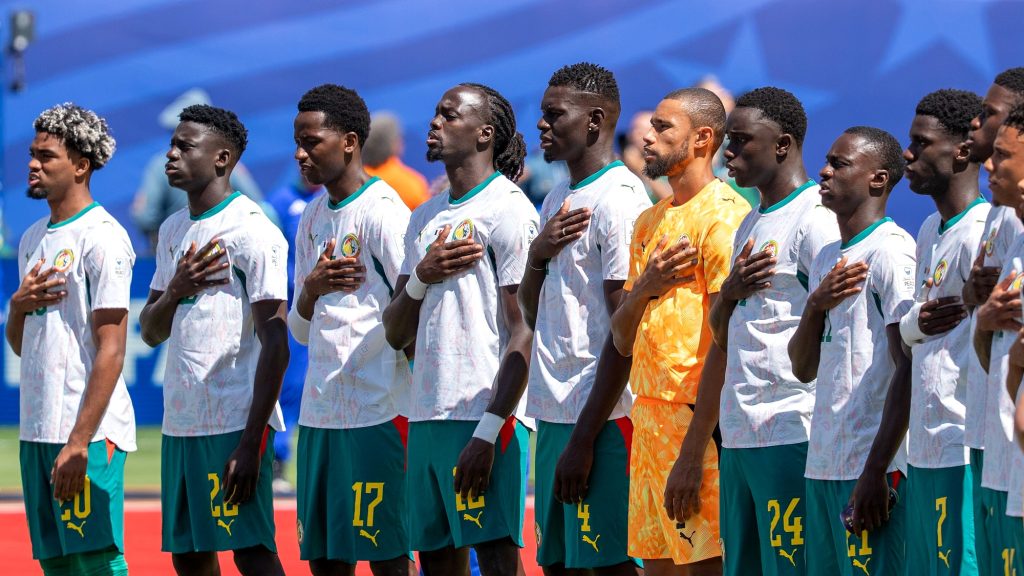
LAUSANNE, Switzerland: Senegal have been reinstated as 2025 Africa Cup of Nations champions after the Court of Arbitration for Sport (CAS) overturned a ruling that had handed the title to Morocco. The decision ends, for now, a 10-month dispute that put African football’s governance and its record prize money under scrutiny.

CAS upheld the appeal by the Senegalese Football Federation (FSF) against the Confederation of African Football (CAF) and the Royal Moroccan Football Federation (FRMF), it said in a media release on Tuesday, 24 November. The panel’s decision was unanimous.
The ruling sets aside a CAF Appeal Board decision from March that recorded the final as a 3-0 forfeit win for Morocco. It restores the 1-0 extra-time result Senegal won in Rabat on 18 January.
The case turned on the ‘field of play’ doctrine, under which CAS does not normally review referees’ decisions taken on the pitch. In the final, Senegal’s players and coach Pape Thiaw walked off in protest at a late penalty awarded to Morocco, then returned, and the match was played to a finish.
“After having examined the arguments raised by the Parties, the Arbitral Panel considered that the Referee’s decision to resume the match or to stop it fell definitively within his sole authority,” CAS said. It concluded: “in resuming the match, the Referee did not err in law.”
The FRMF had argued that Senegal breached Articles 82 and 84 of the AFCON regulations by leaving the pitch. CAS said those articles apply only when a team’s conduct leads the referee to call off a game permanently, so they did not apply here.
CAS also noted that the FSF, Thiaw and certain players had already been sanctioned by CAF in separate disciplinary proceedings. The Guardian reported that CAF’s fines on the two federations, players and Thiaw came to more than $1 million.
Being champion carries a much bigger cheque. CAF’s published prize grid, revised on 20 December 2025, puts a $6 million gap between first and second place at AFCON 2025.
Source: CAF Competitions Prize Money grid, revised 20 Dec 2025, and CAF release, 20 Dec 2025.
Neither CAS nor CAF said on Tuesday whether any prize money will move between the two federations. Al Jazeera’s correspondent in Dakar reported that the trophy had stayed in Senegal and that the prize money had already been given to the players.

For sponsors, broadcasters and investors in African football, the case shows how long a disputed result can stay open. The title was decided by a CAF disciplinary board, reversed by a CAF appeal board and restored by CAS over 10 months.
Football’s lawmakers have since moved to close the gap in the rules. “A team that causes a match to be abandoned will, in principle, forfeit the match,” the International Football Association Board (Ifab) said in April, the BBC reported.
Clearer rules lower the risk for any business whose contracts, bonuses or payouts depend on an official result. A result that can be rewritten months later is harder to price, insure and market around.
The ruling also lands as qualifying for the next edition continues. Botswana’s Zebras are still chasing a place at AFCON 2027, which East Africa’s co-hosts are preparing to stage.
The FRMF expressed its “surprise” at the ruling and said it would “pursue all available legal avenues to challenge the decision”, the BBC reported. In its statement, the federation repeated a complaint about alleged contact between panel member Ulrich Haas and the FSF’s president before the award.
FSF president Abdoulaye Fall “categorically” denies that any such phone call took place, according to the BBC. CAS awards can be challenged at Switzerland’s Federal Tribunal, though only on limited procedural grounds, AP and the Guardian reported.
CAF had not commented when the BBC published its report on Tuesday. Its president, Patrice Motsepe, has repeatedly said CAF will respect and adhere to the CAS ruling, the BBC said.
CAS said the full grounds have been sent to the parties and will be published in due course unless they request confidentiality. Read the document: CAS media release on the AFCON 2025 final, 24 November 2026 (PDF).

Written by
Tumisang Bogwasi, Founder & CEO of Brimco. 2X Award-Winning Entrepreneur. It all started with a popsicle stand.