NASA's James Webb Space Telescope and Hubble Space Telescope have jointly observed NGC 6786, a distant 'fossil group' of galaxies. Their findings reveal unexpected active star formation and recent mergers within this system, challenging existing models of galaxy evolution and offering new insights into the formation history of the Milky Way.
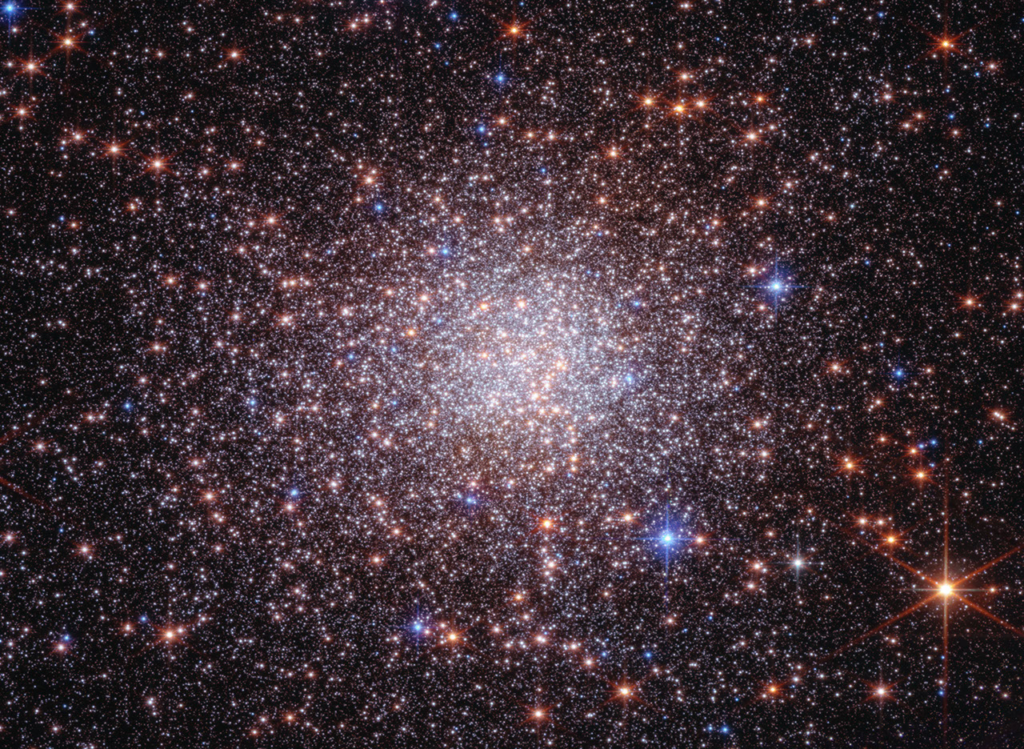
WASHINGTON, United States – NASA’s James Webb Space Telescope and Hubble Space Telescope have provided new insights into the formation history of the Milky Way galaxy by observing a distant galaxy cluster known as NGC 6786. The combined data reveals a surprisingly chaotic past within this ‘fossil group’, a system previously thought to be largely dormant, suggesting active star formation and recent galactic mergers NASA Science article.

NGC 6786 is considered a ‘fossil group’ because it is dominated by a single, massive central galaxy, similar to how astronomers believe the Milky Way might have appeared billions of years ago. These systems typically contain a significant amount of dark matter and a high ratio of X-ray luminosity to optical luminosity, indicating a history of early and efficient mergers that consumed smaller satellite galaxies.
Researchers utilized Hubble’s Advanced Camera for Surveys (ACS) and Wide Field Camera 3 (WFC3) to detect widespread star formation across NGC 6786. The James Webb Space Telescope, employing its Near-Infrared Camera (NIRCam) and Mid-Infrared Instrument (MIRI), then helped analyze the chemical composition and dynamics of the gas and dust within the cluster. This combination allowed for an unprecedented view into the system’s active processes.
The observations, led by Sarah Sweet of the University of Queensland, Australia, show that the central galaxy of NGC 6786 is undergoing significant star formation and features an active galactic nucleus (AGN) powered by dark matter. This activity contradicts previous assumptions that fossil groups are largely quiescent systems that completed their major mergers much earlier in the universe’s history.
This scientific breakthrough underscores the United States’ continued leadership in space exploration and astronomical research. Investments in advanced observatories like the Webb and Hubble telescopes, primarily funded through NASA, yield significant returns in fundamental scientific understanding. Such discoveries enhance the U.S. reputation as a hub for scientific innovation and attract global talent to its research institutions.
The findings also highlight the strategic importance of sustained funding for large-scale aerospace projects. The data from Webb and Hubble provides critical empirical evidence that refines cosmological models, impacting fields from theoretical astrophysics to material science for future space missions. This reinforces the long-term economic and intellectual benefits derived from U.S. federal support for space science endeavors.

Written by
Tumisang Bogwasi, Founder & CEO of Brimco. 2X Award-Winning Entrepreneur. It all started with a popsicle stand.