


The United Kingdom's £8.35 billion Skynet 6 military satellite communications upgrade has been given a "red" delivery rating by the National Infrastructure and Service Transformation Authority (NISTA), indicating that successful completion in its current form is unachievable. This critical assessment comes amid significant delays, rising costs, and issues attributed to supplier performance and Ministry of Defence staffing shortages.

A recent study by NASA scientists has leveraged a remarkably preserved meteorite to provide critical new data on the formation and characteristics of ancient asteroids. This research offers a deeper look into the early solar system's chemical processes and the origins of planetary building blocks, enhancing the broader narrative of astromaterials science.
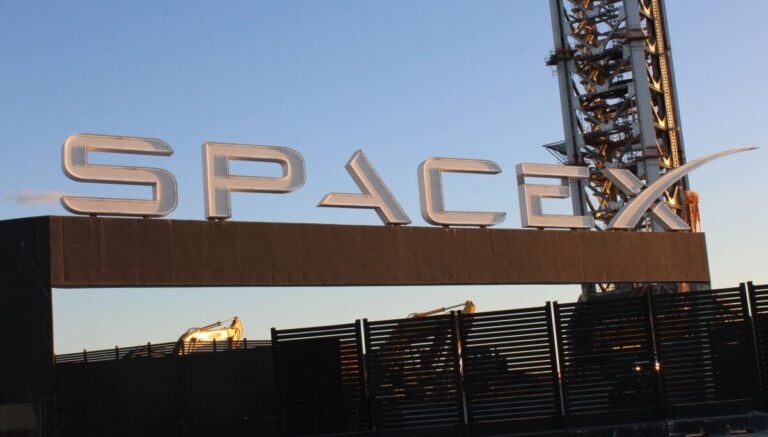
SpaceX's 13th Starship flight test aborted on the launchpad after four Raptor engines failed to ignite, delaying critical development for NASA's Artemis lunar missions.

The Waxing Gibbous Moon, a key phase in the lunar cycle, currently dominates the night sky, attracting attention from astronomers and the public. NASA highlights this stage as part of its continuous efforts to document astronomical phenomena and promote engagement in space science.

Collaboration between NASA and GE Aerospace is paving the way for hybrid-electric propulsion systems in aviation, aiming for increased fuel efficiency and reduced emissions.

NASA's Perseverance rover has captured and transmitted a comprehensive panoramic view of 'Broom Point,' a significant geological feature within Mars' Jezero Crater. The detailed imagery, acquired by the rover's Mastcam-Z imager, offers scientists crucial data for understanding the Red Planet's ancient environmental history and potential past habitability.

Astronomers have identified an object orbiting a brown dwarf that is nearly as massive as Jupiter, representing a significant exomoon candidate. The discovery, detailed in a recent Nature publication, was made using the radial velocity method, advancing the search for moons beyond our solar system and prompting a re-evaluation of cosmic classification criteria for planetary bodies.
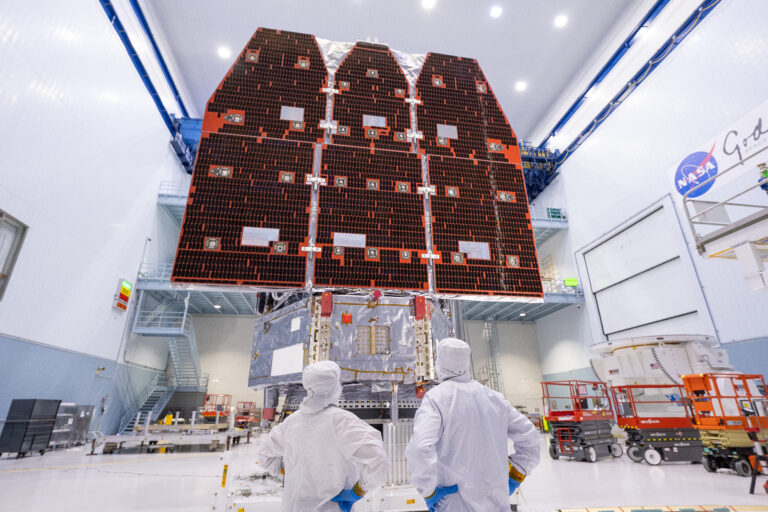
NASA has extended invitations to media for the upcoming launch of its Nancy Grace Roman Space Telescope, a next-generation observatory poised to deliver groundbreaking insights into dark energy, exoplanets, and black holes. The mission is set for a May 2027 launch from Cape Canaveral, Florida, aboard a SpaceX Falcon Heavy rocket.

A National Aeronautics and Space Administration (NASA) photographer recently documented aerial perspectives of Washington D.C. aboard an F-18 aircraft. This initiative highlights NASA's diverse operational capabilities, extending beyond space exploration to include aeronautical research and public engagement.
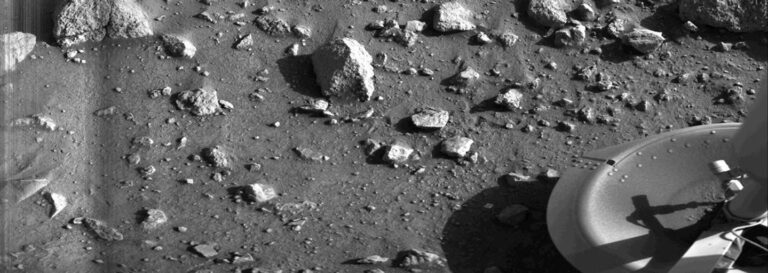
NASA Langley Research Center's foundational work in aerodynamics and spacecraft technology has been instrumental in achieving milestones in Mars exploration, including the Perseverance rover's landing and ongoing research into Martian conditions.